
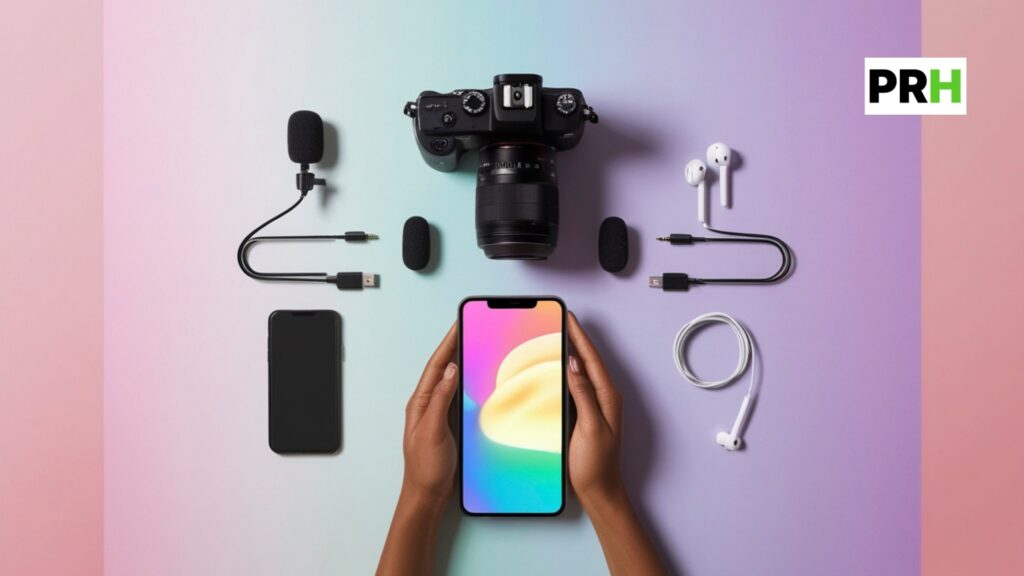

Party rental businesses that implement strategic video marketing can expect 4.8% website conversion rates—65% higher than businesses without video. This comprehensive guide synthesizes 2024-2025 best practices across short-form, long-form, and live video formats specifically for bounce house rentals, party equipment operators, and event rental companies. The party rental industry reached $18.65 billion in 2025, yet only 9% of small businesses leverage YouTube marketing, representing a significant competitive opportunity for early adopters.
Parents booking birthday parties and event planners evaluating vendors require multiple touchpoints before contacting a company. Video content accelerates trust-building by visually demonstrating safety standards, equipment quality, and professional service—the three factors these audiences prioritize most when making booking decisions.
Short-form video dominates discovery and engagement
Short-form vertical video across TikTok, Instagram Reels, and YouTube Shorts has become the primary discovery mechanism for local service businesses. 66% of users find short-form videos the most engaging content format, making these platforms essential for party rental visibility.
Platform algorithm priorities differ significantly
TikTok’s 2025 algorithm has shifted its engagement threshold from 3-5 seconds to 15-20 seconds of watch time before content receives broader distribution. Shares and saves now carry significantly more weight than likes—these “high-value” engagement signals indicate genuinely valuable content. Cross-posted content from other platforms is penalized up to 40% in reach, and the platform now limits hashtags to five maximum, making strategic selection critical.
Instagram Reels prioritizes “sends per reach” as its most important ranking signal, confirmed directly by Adam Mosseri. Reels drive 22% more interaction than standard video posts and are shared 49% more often than carousels or photos. The platform removed hashtag following in December 2024, but hashtags still assist search discovery. Focus on 3-5 targeted hashtags rather than the previously recommended 30.
YouTube Shorts operates independently from YouTube’s long-form algorithm, meaning poor Shorts performance won’t hurt your channel. The “viewed vs. swiped” ratio matters most—views are based on intent, not impressions. Shorts now extend to 3 minutes, and keyword-rich descriptions significantly boost discoverability through both YouTube and Google search.
Content formats that work for visual rental businesses
Transformation reveals perform exceptionally well—showing an empty backyard becoming a fully decorated party with bounce house captures attention and demonstrates value. Use trending transition sounds and open with a hook in the first three seconds. Setup time-lapses showing inflatable inflation are surprisingly satisfying to watch and consistently generate engagement.
POV (point-of-view) videos draw viewers into experiences: “POV: Kids seeing their bounce house for the first time” or “POV: You’re setting up a birthday party.” Day-in-the-life content documenting morning warehouse prep through delivery, setup, and happy customers humanizes the business and builds trust.
Effective first-three-second hooks include:
- Question hooks: “Which bounce house would you choose?”
- Transformation teases: “Watch this empty backyard become a party…”
- Behind-the-scenes reveals: “What really happens before your party starts”
- FOMO/secret hooks: “No one talks about this when renting bounce houses…”
Cross-platform repurposing without penalties
Instagram shadowbans Reels containing TikTok watermarks, and YouTube Shorts deprioritizes content with competitor watermarks. Create all videos in a third-party app like CapCut before uploading to any platform. Export watermark-free versions, then customize captions, hashtags, and trending sounds for each platform.
All three major platforms use identical format specifications: 9:16 vertical aspect ratio at 1920×1080 resolution. The optimal length for maximum engagement is 30-60 seconds across platforms. Use tools like Repurpose.io or Nuelink to schedule and publish across TikTok, YouTube Shorts, and Instagram from a single dashboard without manual reformatting.
YouTube builds authority and captures search intent
YouTube represents an untapped opportunity—local businesses face far less competition than traditional SEO channels. YouTube videos appear in Google’s video carousels and local pack results, creating dual discoverability for properly optimized content.
Local SEO optimization drives qualified traffic
Front-load location keywords in video titles: “Bounce House Rental Austin TX | Complete Party Setup Guide” rather than generic titles. The first 48-100 characters of descriptions appear in search results—include your main keyword plus location immediately. Add your NAP data (name, address, phone) in every description for local SEO reinforcement.
Geotag videos in YouTube’s Advanced Settings with your business address coordinates, and mention your location verbally within videos since the algorithm indexes audio. Embed YouTube videos on corresponding website pages to boost both YouTube rankings and site SEO simultaneously.
Content types that convert viewers to customers
Tutorials and how-to videos (7-10 minutes) establish expertise and rank for informational searches: “How to Set Up a Backyard Birthday Party” or “What Size Tent Do I Need for 50 Guests?” These capture customers in early planning stages.
Product demonstration videos (3-5 minutes each) showcase individual bounce houses, inflatables, and equipment. Create a series covering your entire inventory—each video becomes a searchable asset. Behind-the-scenes content (5-8 minutes) showing warehouse tours, setup processes, and team introductions humanizes your brand.
Customer testimonials (1-3 minutes) act as powerful social proof—two out of three people say they’d be more likely to purchase after watching a testimonial video. Compile event highlights with permission to create showcase content.
Video structure prevents viewer drop-off
The hook within the first 5-15 seconds determines whether viewers continue or leave. State value immediately: “In this video, you’ll learn exactly how to…” Use flash-forward techniques showing the finished result before explaining the process. Avoid long intros, logos, or “hey guys what’s up” openings.
Break body content into numbered sections with timestamps in descriptions for navigation. Use pattern interrupts every 30-60 seconds—B-roll footage, graphics, or camera angle changes maintain attention. Tease upcoming content: “In just a minute, I’ll show you…” keeps viewers watching.
Videos 7-15 minutes tend to rank higher in YouTube search due to higher watch time potential. Videos over 8 minutes can include mid-roll ads for monetization. Target 70%+ retention in the first 30 seconds and 40-50% overall average for strong performance.
Thumbnail optimization increases click-through rates
90% of top-performing videos use custom thumbnails. Design at 1920×720 pixels with high-contrast colors and minimal text (3-5 words maximum). Including faces with expressive emotions increases click-through rates by 20-30%. For party rental content, show colorful equipment setups, happy families, or before/after comparisons.
Live video creates real-time trust and engagement
Live streaming offers the highest organic reach of any social content type. Facebook Live allows 8-hour broadcasts ideal for longer events, while Instagram Live creates urgency with its 60-minute limit and priority Stories placement.
Platform selection based on audience demographics
Facebook Live reaches the 30+ age group—decision-makers booking children’s parties and corporate events. 57.8% of Facebook users have purchased during a livestream, making it effective for promotional content. Videos automatically save to your page with timestamped comments for ongoing discoverability.
Instagram Live targets younger audiences under 35, including parents planning parties and assistant event planners. Built-in engagement features like Q&A stickers and guest invitations encourage interaction. 45.8% of Instagram users have purchased during livestream events.
YouTube Live offers the best long-form searchability—broadcasts remain discoverable long after streaming ends. Superior monetization through Super Chat and memberships appeals to growing channels.
For party rental businesses, consider multistreaming to Facebook and Instagram simultaneously using StreamYard or Restream. This maximizes reach without additional production time.
High-engagement live content for rental businesses
Behind-the-scenes setup streams showing real-time event transformations perform well. Narrate your process while setting up—explain safety procedures, share design decisions, and answer viewer questions. Q&A sessions addressing party planning questions position your team as experts.
Product showcase streams work effectively for new inventory reveals. Demonstrate how equipment looks, operates, and styles with different themes. Event walkthroughs and reveals showing before/during/after venue transformations create compelling content.
Seasonal announcement streams build anticipation for spring wedding packages, summer booking openings, or holiday party specials. Offer exclusive live-viewer discounts to reward attendance.
Engagement tactics that build momentum
Reintroduce yourself every 5-10 minutes for late joiners—live streams accumulate viewers over time. Call out usernames when responding to comments; this personal recognition encourages continued participation. Pre-seed questions by having team members submit initial queries.
Offer live-only incentives: discount codes expiring when the stream ends, giveaway entries for commenters, or first-access booking windows. Simple entry requirements like “Drop a comment to enter” or “Share to enter” generate engagement signals that boost algorithmic distribution.
Production quality balances professionalism with authenticity
Live streams and short-form content thrive on authenticity—viewers tolerate imperfection for genuine connection. However, minimum quality standards apply: clear audio, adequate lighting, stable internet, and 1080p minimum resolution.
Equipment investment priorities for mid-tier budgets
Audio quality determines whether viewers stay or leave. The Blue Yeti microphone ($100) offers the best balance of quality, features, and ease of use for small businesses. For mobile streaming, the Boya BY-M1 lavalier microphone ($20) provides adequate quality at minimal cost.
Lighting dramatically improves video quality even with basic cameras. An 18-inch ring light ($30-50) provides flattering face illumination for desk streaming. For product showcases, a 2-pack Neewer softbox kit ($80-120) creates professional diffused lighting.
Camera investments come last—modern smartphones produce excellent video. If upgrading, the Logitech Brio ($175) offers 4K capability and strong low-light performance for desk setups. The Sony ZV-E10 ($700) provides mirrorless camera quality with built-in Product Showcase Mode and USB streaming capability for professional productions.
Starter to professional budget tiers
Entry-level setup (~$150-200): Existing smartphone, Blue Snowball mic ($50), 18″ ring light ($40), phone tripod ($20), StreamYard free tier.
Mid-tier setup (~$400-500): Logitech Brio or Elgato Facecam ($175-200), Blue Yeti mic ($100), Elgato Key Light Mini ($100), tripod and boom arm ($50), StreamYard Basic ($45/month).
Professional setup (~$800-1000): Sony ZV-E10 mirrorless camera ($700-800), Shure MV7 microphone ($250), 2x Neewer softbox kit ($100), quality tripod ($75), StreamYard Pro ($50-90/month).
Strategic planning maximizes content ROI
Creating videos without defined goals wastes resources. Define specific objectives for each video: awareness, lead generation, or conversion. 87% of video marketers report video directly increases sales, but this requires intentional strategy.
Seasonal content calendar for party rentals
Q1 (January-March): Create “planning your summer party” educational content. Showcase new inventory acquisitions. Target wedding planners booking 6-12 months ahead. Produce behind-the-scenes warehouse tours during slower booking periods.
Q2 (April-June): Focus on graduation party setups and spring wedding showcases. Collect customer testimonials during events. Create outdoor event preparation tips.
Q3 (July-September): Capture maximum event footage during peak season. Film setup time-lapses and customer reactions. Launch fall booking campaigns. Showcase corporate picnic and festival capabilities.
Q4 (October-December): Produce holiday party themes and corporate year-end event content. Create “year in review” compilations. Push early 2026 booking content. Use off-season for maintenance documentation videos.
Plan content 30-60 days in advance to allow batching without sacrificing flexibility. Film one day per month to capture 5+ short-form videos from the same setup—this maintains consistent posting without daily production demands.
Measuring performance and attribution
Track engagement rate (43% of marketers prioritize this), watch time, view count, click-through rate, and conversion rate. Websites with embedded video convert at 4.8% compared to 2.9% without video.
For attribution, use UTM parameters on video CTAs and links. Create unique landing pages per video campaign. Assign promo codes specific to video content. Include “How did you hear about us?” tracking at booking. Connect Google Analytics to monitor traffic sources from video platforms.
Video supports local SEO and Google Business Profile
Add videos to your Google Business Profile—specifications allow 30-second videos up to 75MB at minimum 720p resolution. Best video types include quick warehouse tours, company introductions, and time-lapse event setups. Regular profile updates including video signal active business engagement to Google’s local algorithm.
“Near me” searches comprise 46% of all Google queries, making local optimization essential. YouTube videos with location-based keywords appear in Google’s video carousel for local searches. Embed website videos with VideoObject schema markup combined with LocalBusiness schema for enhanced rich snippet appearance.

Building trust with parent and planner audiences
Parents choosing bounce houses prioritize safety, cleanliness, and reliability. Event planners evaluate portfolio quality, punctuality, and pricing transparency. Video content addresses these concerns more effectively than text or images alone.
Safety messaging that converts concerned parents
Feature SIOTO certification (Safe Inflatable Operators Training Organization) prominently—this industry-recognized credential has represented safety excellence for 18+ years. Display ASTM F2374 compliance, the primary safety standard for inflatable amusement devices. Show insurance certificates and liability coverage.
Create safety demonstration videos showing proper anchoring with 20-inch stakes or 50-pound sandbags. Document daily equipment inspections and emergency protocols. Demonstrate staff positioning for supervision and maximum occupancy enforcement. These videos can serve as pre-rental customer education, reducing anxiety and accelerating booking decisions.
Behind-the-scenes content builds confidence
Post-event cleaning videos showing thorough sanitization between rentals differentiate professional operators from casual competitors. Document equipment storage conditions and inspection logs. Show staff training procedures and ongoing professional development.
Setup process videos reveal professionalism: uniformed crews, efficient procedures, weather contingency planning, and on-time arrivals. Time-lapse transformations from empty venue to complete event setup demonstrate capability and build excitement.
User-generated content amplifies authenticity
Request permission to film at events and encourage customers to tag and submit their own content. User-generated content drives 6.9x higher engagement than brand-created content. Offer small discounts in exchange for video testimonials or permission to use event footage.
84% of consumers trust online reviews as much as personal recommendations—video testimonials take this trustworthiness to another level. Feature full customer names, event types, and specific praise for maximum credibility.
Common mistakes that undermine video marketing efforts
No clear strategy or purpose leads to wasted resources. Define specific goals for each video before production. One-and-done approaches fail—commit to consistent, long-term video strategy across the marketing funnel.
Videos that run too long lose viewers. 91% of marketers say optimal length is under 10 minutes for YouTube; social videos should typically stay under 60 seconds. Hook viewers in the first three seconds and eliminate unnecessary content.
Over-selling turns off audiences. Provide value first—educate and entertain before selling. Every video needs a clear call-to-action, but position it after delivering value.
Poor audio quality damages credibility more than poor video quality. Invest in microphones before cameras. Test equipment before going live.
Inconsistent branding confuses audiences. Maintain consistent colors, fonts, logo placement, and intro/outro elements across all video content.
Not repurposing content wastes production investment. Every long-form video should generate 3-5 short-form clips. Time-lapses, key quotes, and highlight moments become standalone content for multiple platforms.
Overspending on production while underspending on promotion creates beautiful videos nobody sees. Allocate budget for paid distribution, not just creation.
Conclusion: Implementation priorities for immediate impact
Party rental businesses should prioritize setup transformation time-lapses as initial content—these combine visual appeal with shareability and require minimal on-camera presence. Safety demonstration videos address the primary concern of parent audiences and differentiate professional operators. Customer testimonials provide social proof that accelerates booking decisions.
Start with smartphone video production and invest in audio quality first. The Blue Yeti microphone and basic ring light transform content quality for under $150. Begin posting 3-5 short-form videos weekly across TikTok and Instagram Reels, then add monthly YouTube content as capacity allows.
Focus on Facebook Live for reaching decision-making parents in the 30+ demographic. Stream setup processes, Q&A sessions, and seasonal announcements at consistent weekly times. Repurpose live content into short-form clips for ongoing platform presence.
The competitive advantage belongs to party rental businesses that document everything—setups, customer reactions, behind-the-scenes processes, and seasonal events. This content library compounds over time, creating ongoing marketing assets from regular business operations. Businesses that implement these strategies now establish authority before competitors recognize video marketing’s essential role in local service discovery.