
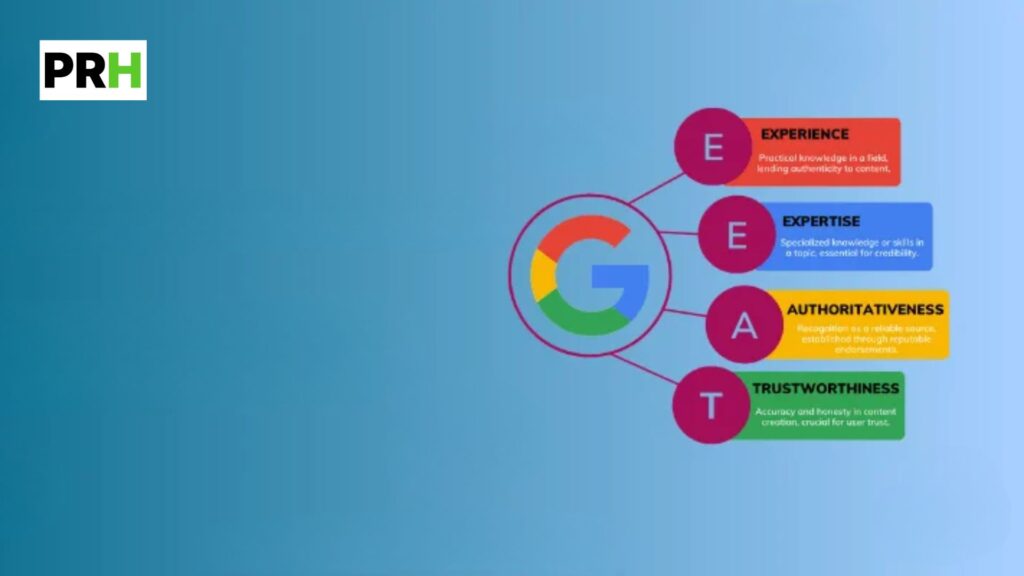

Google doesn’t have a secret “trust score” for your website—but demonstrating trustworthiness still matters immensely for search visibility. E-E-A-T (Experience, Expertise, Authoritativeness, Trustworthiness) is Google’s quality framework that guides how their algorithms assess content credibility. For party rental and bounce house businesses, implementing E-E-A-T correctly means showing potential customers—and Google—that you’re the reliable, experienced choice for their events.
This isn’t about gaming an algorithm. E-E-A-T improvements work because they genuinely make your business more trustworthy to the parents and event planners searching for rentals. The timeline is 6-12 months for meaningful ranking impact, but the customer confidence you build starts immediately.
What E-E-A-T actually means for your business
Google added the extra “E” for Experience in December 2022, recognizing that firsthand knowledge matters as much as formal credentials. Here’s what each component means for a party rental company:
Experience asks whether you’ve actually done what you’re writing about. Photos from real events you’ve set up, behind-the-scenes videos of your team inflating bounce houses, and case studies from actual parties demonstrate this. A generic description of “bounce house rentals” signals less experience than “In 15 years of party rentals, I’ve learned that afternoon setups in Texas summers require specific anchoring techniques.”
Expertise focuses on knowledge and skill. Your certifications, safety training documentation, years in business, and detailed how-to content all signal expertise. For party rentals, this includes demonstrating knowledge about weight limits, proper anchoring, sanitation protocols, and age-appropriate equipment selection.
Authoritativeness measures whether others recognize you as a trusted source. This shows through backlinks from local venues, mentions in community publications, partnerships with event planners, and the volume of positive reviews across multiple platforms.
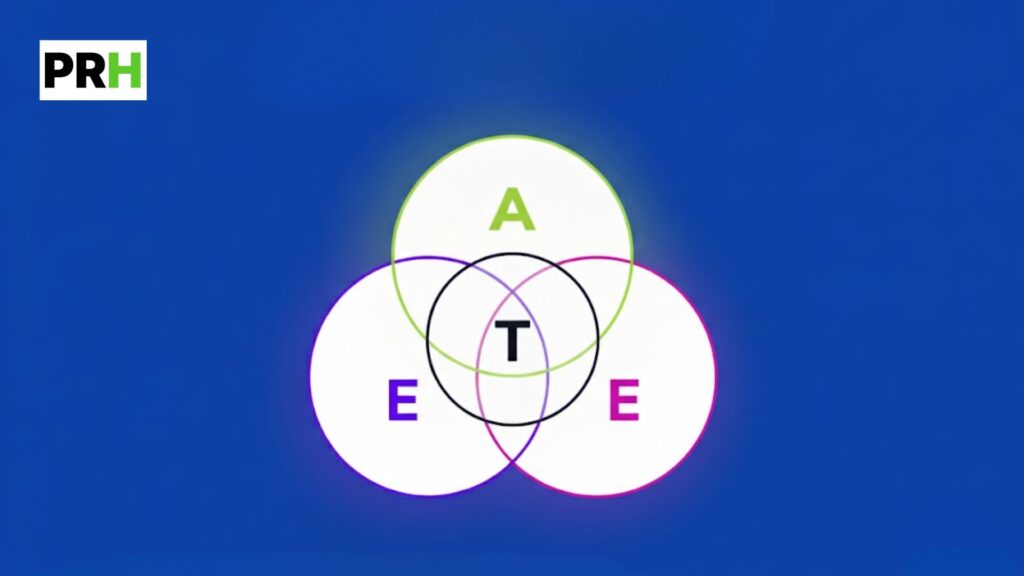
Trustworthiness is what Google calls “the most critical component”—Trust sits at the center of the E-E-A-T framework, with the other three factors supporting it. For party rental businesses handling children’s safety, trust signals like insurance documentation, licensing, and clear safety policies carry extra weight.
Why party rentals face heightened trust standards
Google applies stricter scrutiny to topics that “could potentially impact a person’s future happiness, health, financial stability, or safety”—called YMYL (Your Money Your Life) content. Party rental businesses operate in a gray area that leans toward YMYL territory because you’re dealing with children’s safety.
Bounce houses have documented safety concerns: weight limits, proper anchoring requirements, supervision protocols, and weather restrictions. Content discussing these safety aspects faces higher trust expectations than, say, a blog post about party decoration trends. This isn’t a disadvantage—it’s an opportunity to differentiate from competitors who ignore safety credibility.
Trust signals that matter most for safety-adjacent businesses:
- Liability insurance prominently displayed (e.g., “$2 million coverage”)
- Business licensing and permits
- Industry certifications (SIOTO certification for inflatables, ILEA membership)
- Background-checked staff documentation
- Detailed safety rules and supervision requirements
- Equipment inspection and maintenance schedules
Successful party rental websites consistently feature dedicated “Safety” or “Our Commitment” pages that document cleaning protocols, display certification badges, and include staff bios highlighting relevant training.
The misconception killing most E-E-A-T strategies
E-E-A-T is not a ranking factor. Google’s Danny Sullivan stated plainly in February 2024: “There is no E-E-A-T score. Having an expert write things doesn’t magically make you rank better.” This distinction matters because chasing a non-existent metric wastes effort.
Quality Raters—approximately 16,000 people globally—use E-E-A-T guidelines to evaluate search results. But their ratings don’t directly affect your rankings. Instead, Google’s engineers use rater feedback to refine algorithms that measure signals correlating with trustworthiness.
The practical implication: you can’t “hack” E-E-A-T by adding fake credentials or stuffing author bios with inflated titles. Google doesn’t verify self-declared expertise claims. What works is building genuine signals—reviews, backlinks, community recognition—that algorithms can actually measure.
Google Business Profile is your E-E-A-T cornerstone
For local service businesses, Google Business Profile (GBP) is the single most important E-E-A-T asset. A complete, optimized profile signals legitimacy and appears in the Local Pack results that dominate party rental searches.
Businesses with photos receive 42% more requests for directions and 35% more click-throughs. Google explicitly states that “more reviews and positive ratings can improve where your Google Business Profile listing ranks.”
GBP optimization requirements:
- Complete every available field accurately
- Upload original photos of your equipment, team at events, and setup process (not stock photos)
- Post updates regularly using Google Posts
- Monitor and respond to the Q&A section
- Keep information exactly consistent with your website
NAP (Name, Address, Phone) consistency across your website, GBP, social profiles, and directory listings matters significantly—research shows inconsistent NAP can impact local search performance by up to 16%. One major brand lost their top-3 position for two years simply because conflicting location data confused Google.
Content strategies that demonstrate real expertise
The content that builds E-E-A-T doesn’t look like thin service pages stuffed with keywords. It demonstrates genuine knowledge through depth and practical value.
High-impact content types for party rentals:
| Content Type | What It Signals | Example Topic |
| Safety guides | Expertise + Trust | “Bounce house safety: What every parent should know” |
| How-to content | Expertise | “How to choose the right inflatable for your child’s age” |
| Case studies | Experience | “How we set up Sarah’s 50-person graduation party” |
| Behind-the-scenes | Experience | “A day with our setup crew: What happens before your party” |
| Comparison content | Expertise | “Tent rental vs. indoor venue: Pros and cons for Texas summers” |
| Local guides | Authority | “Best outdoor party venues in [Your City]” |
First-person experience signals authenticity. “In my 15 years of party rentals, I’ve learned…” carries more weight than generic advice that could come from anyone—or from AI.
Author bios matter for reader trust, even though Google’s John Mueller confirmed they’re not a technical ranking requirement. Ryan Jones, a former Google Quality Rater, clarifies the reality: “If ranking is the only thing you care about, then no, you don’t need it. That said, most of us care about users, conversions, sales—and users love this stuff.”
Effective author bios run 50-100 words, written in third person, including relevant experience, credentials, and a professional photo. Link to a full author page with expanded details.
Technical signals that reinforce trust
Schema markup helps Google understand and connect your business information. For local service businesses, prioritize these structured data types:
LocalBusiness schema on your homepage establishes your business entity with address, phone, hours, and founding date. Use the most specific business type available in Schema.org’s hierarchy.
Service schema marks up individual offerings (bounce house rentals, tent rentals, table/chair rentals) with areas served and pricing ranges.
FAQPage schema on FAQ content can qualify for rich results, increasing visibility in search.
Person schema for team member bio pages connects author credibility to your content.
Beyond schema, basic trust fundamentals include HTTPS (confirmed as a ranking factor by Google), a privacy policy, clear contact information on every page, and fast mobile load times. These basics are table stakes—missing them undermines everything else.
Building authority through local connections
Local businesses have an advantage national brands lack: community authority. Google’s local search algorithms reward businesses recognized within their geographic area.
High-priority citation sources:
- Google Business Profile, Yelp, Bing Places, Apple Maps, Facebook (Tier 1)
- Better Business Bureau, event planning directories, industry associations (Tier 2)
- Local Chamber of Commerce, community organization partnerships, local news mentions (Tier 3)
Authority-building tactics that work for party rentals:
- Sponsor school events, PTA functions, and community gatherings (generates mentions and goodwill)
- Partner with complementary businesses—caterers, photographers, DJs, event venues—for mutual referrals and cross-links
- Reach out to local parenting bloggers and event planning resources for features
- Respond to local journalist queries about party planning or summer activities
- Join your local Chamber of Commerce for directory listing and networking mentions
The key insight: “Being trusted is as much about what other people say about you as what you say yourself.”
Reviews are experience proof that algorithms can measure
Google explicitly lists reviews as a “prominence-based ranking factor” for local results. Beyond rankings, reviews directly demonstrate E-E-A-T: they prove real humans have direct experience with your business.
Impact statistics:
- Google reviews account for approximately 20% of local visibility
- Businesses with 10+ reviews see a 15-20% boost in search traffic
- 92% of consumers expect a 4+ star rating before engaging
Review strategy for party rentals:
- Implement a systematic review request process after every successful event
- Respond to all reviews within 24-48 hours—positive and negative
- Don’t use AI for responses; consumers lose trust when they detect automated replies
- Diversify across platforms: Google, Yelp, Facebook, and industry-specific sites like PartySlate
How you respond to negative reviews matters as much as your star rating. Professional, solution-oriented responses demonstrate trustworthiness to prospective customers reading those reviews.
Mistakes that undermine your E-E-A-T efforts
Publishing “admin” content without attribution signals low quality. Every piece of content needs clear authorship linked to a real person on your team.
Using stock photos instead of original images undermines experience signals. Smartphone photos of your actual equipment and real events—even if less polished—demonstrate firsthand involvement that stock images never can.
Expecting E-E-A-T to replace traditional SEO leads to disappointment. Lily Ray, a respected E-E-A-T expert, emphasizes: “Addressing E-A-T does not improve SEO performance in a vacuum. All the traditional initiatives—on-page optimization, earning high-quality links, and technical SEO—must also be executed for E-A-T efforts to be successful.”
Neglecting off-page signals limits results. Many businesses focus entirely on website improvements while ignoring reputation building through reviews, press mentions, and community recognition—the signals that actually demonstrate authority to algorithms.
Treating E-E-A-T as a checklist misses the point. Implementation varies by business and content type. A bounce house safety guide requires more rigorous expertise signals than a party theme inspiration post.
Auditing your current E-E-A-T signals
Before improving E-E-A-T, assess your baseline across three levels:
Brand-level signals: Does your website have a comprehensive About page with team photos and company history? Are contact details displayed prominently? Do you have a privacy policy and terms of service? Is your site secure (HTTPS) and mobile-responsive?
Content-level signals: Does every piece of content have clear authorship? Are factual claims supported by sources? Is content dated with “last updated” information? Do you use original images rather than stock photos?
Author-level signals: Do content creators have dedicated profile pages with credentials, experience, and professional photos? Are authors connected to external credibility (LinkedIn profiles, industry publications)?
Rate each signal as sufficiently demonstrated, needs improvement, or not demonstrated. Sample 5-10 representative pieces of content rather than auditing everything—patterns reveal where to focus.
Practical implementation timeline
E-E-A-T improvements are long-term investments. Marie Haynes, a Google core update expert, notes that “Google often doesn’t do major reassessments of overall site quality until the next core update rolls out—so any work done to improve E-A-T might take at least several months to be reassessed.”
Realistic timeline expectations:
| Improvement Type | Time to Impact |
| Technical fixes (SSL, speed) | Days to weeks |
| On-page content optimization | 1-3 months |
| Author credibility improvements | 3-6 months |
| Overall E-E-A-T improvements | 6-12+ months |
| Major authority building | 12-24 months |
Phase 1 priorities (Month 1-2): Add founding date and years in business to homepage. Create or update About page with team photos and bios. Ensure HTTPS is active. Display contact information prominently. Implement LocalBusiness schema. Add author bylines to all content.
Phase 2 priorities (Months 2-4): Audit and fix NAP consistency across all citations. Build comprehensive author profile pages. Add sources and citations to factual content. Create 3-5 educational blog posts demonstrating expertise. Collect and publish testimonials.
Phase 3 priorities (Months 3-6): Add case studies with original photos. Pursue local backlink and PR opportunities. Develop a systematic review collection process. Create safety-focused content highlighting your protocols and credentials.
Conclusion
E-E-A-T strategy works for party rental businesses not because it tricks an algorithm, but because it genuinely makes you more trustworthy to both Google and the parents searching for safe, reliable rentals for their children’s parties.
The businesses that thrive with E-E-A-T are those that treat it as a framework for building real credibility: documenting actual experience, demonstrating genuine expertise, earning community recognition, and maintaining transparent business practices. These aren’t SEO tactics—they’re business fundamentals that happen to align with what search algorithms reward.
Start with your Google Business Profile and basic trust foundations. Build outward through content that showcases your real experience and authority-building within your local community. Expect 6-12 months for meaningful ranking improvements, but know that every trust signal you build makes your business more compelling to the parents evaluating whether to rent from you.