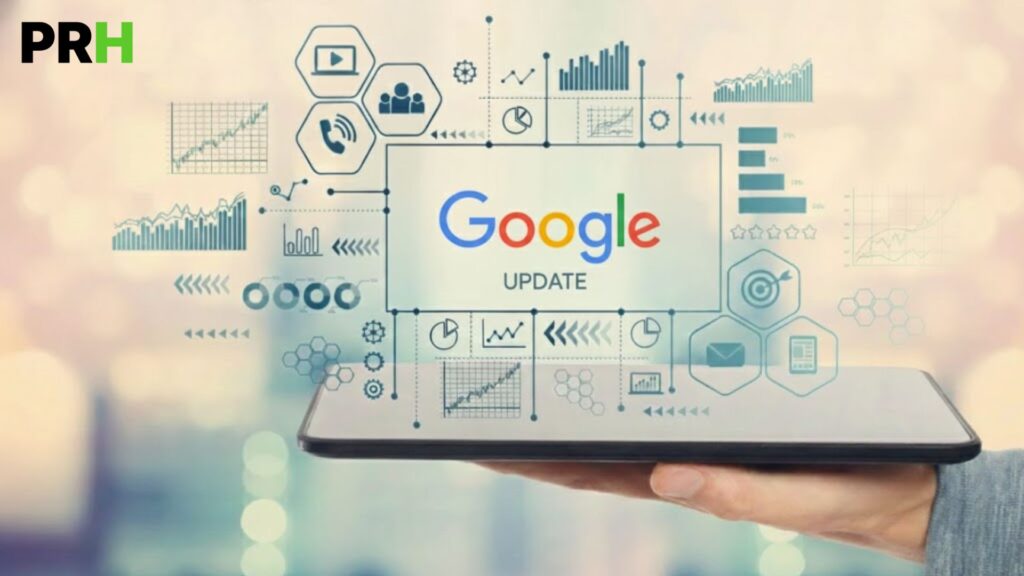

Google released 11 major algorithm updates from January 2024 through November 2025, fundamentally reshaping how local service businesses appear in search results. Party rental companies and similar service-area businesses face a transformed landscape where review signals now carry 20% weight in local pack rankings (up from 16%), the Helpful Content System is embedded directly in core algorithms, and a critical “Diversity Update” means dominating both local pack AND organic results is no longer possible. This guide provides every update, exact rollout dates, and specific recovery strategies for maximizing local visibility and bookings.
The bottom line for party rental and event service businesses: Google now prioritizes authentic expertise, fresh reviews, and mobile-optimized booking experiences over templated location pages and volume-based content strategies. Businesses that adapted to these changes saw visibility gains of 20-45%, while those relying on outdated tactics experienced traffic drops of 40-80% in severe cases.
The 2024 algorithm avalanche transformed local search
Google released an unprecedented four core updates plus three spam updates in 2024—more than any previous year. The March 2024 Core Update alone ran 45 days (the longest ever), integrating the Helpful Content System and targeting scaled content abuse that had plagued local SEO.
March 2024 Core Update (March 5 – April 19, 2024)
The most significant update of the period fundamentally changed how Google evaluates content quality. Google explicitly aimed to reduce low-quality, unoriginal content by 45% in search results. The standalone Helpful Content Update was permanently absorbed into core ranking systems—meaning content quality signals now directly affect every ranking calculation.
Impact on local service businesses: City-based location page strategies that relied on templated content with minimal variation faced severe penalties. Party rental companies using near-identical pages for “Party Rentals in [City A]” versus “[City B]” saw these pages deindexed or buried. However, businesses with unique, valuable content for each service area—including specific inventory availability, local event venue partnerships, or regional pricing—maintained or improved rankings. The update showed more localized results in broader searches, benefiting focused local operators over national competitors.
Small business devastation: An estimated 837 websites were completely removed from Google’s index during rollout. Small businesses relying on AI-generated content without human expertise overlay lost 40-80% of traffic. Google’s Gary Illyes later confirmed that sites hit by the September 2023 Helpful Content Update should “not expect big recoveries”—a harsh reality for businesses waiting for algorithmic relief.
March 2024 Spam Update (March 5 – March 20, 2024)
Running simultaneously with the core update, this spam update introduced three new policy categories: scaled content abuse (mass-produced content regardless of AI or human origin), expired domain abuse (purchasing domains to exploit their authority), and site reputation abuse (parasite SEO). Manual actions for site reputation abuse began May 5-6, 2024, hitting major publishers including Forbes Advisor and CNN Underscored.
Local business opportunity: As large publishers lost rankings for third-party affiliate content in local categories, legitimate local businesses gained visibility. Party rental companies competing against “Best Party Rentals in [City]” listicles from major publishers saw reduced competition in organic results.
August 2024 Core Update and the Diversity Update (August 15 – September 3, 2024)
Google explicitly designed this update to help small and independent publishers, responding to criticism that previous updates favored large sites with extensive backlink profiles. The 19-day rollout brought partial recoveries for some businesses affected by earlier Helpful Content changes.
Critical local SEO discovery: Sterling Sky’s Joy Hawkins identified the “Diversity Update” beginning in August 2024—a fundamental shift where ranking in the local pack now prevents or demotes the same URL from organic results below. Previously, a business could dominate both the local pack and organic listings for the same query. Now Google deliberately diversifies results.
Real impact example: One home services business lost 242 clicks in fall 2024 on a single location after their local pack success caused organic demotion. The fix: link your Google Business Profile to a different (but still relevant) page than your top organic-ranking page. For party rental companies, this means creating separate landing pages for GBP links versus pages optimized for organic rankings.
November and December 2024 brought rapid-fire changes
The November 2024 Core Update (November 11 – December 5, 2024) ran 24 days—double its expected timeframe—emphasizing that sites hit by the 2023 Helpful Content Update should expect no automatic recovery. Multi-location businesses faced intensified local competition as smaller, focused competitors with higher-quality content rose in rankings.
Just seven days after November’s completion, the December 2024 Core Update began (December 12-18), followed immediately by the December 2024 Spam Update (December 19-26). This unprecedented frequency created significant ranking volatility during the critical holiday booking season. E-commerce sites saw average visibility drops of 23%, with bottom-quartile sites dropping 45-60%.

2025 updates brought recoveries and spam crackdowns
March 2025 Core Update (March 13-27, 2024)
The first core update of 2025 specifically targeted programmatic and templated content while continuing E-E-A-T emphasis. A Greenlane Marketing study found 4 out of 6 industries saw 2.5-3.5% of location-based rankings shift to non-local pages. Google appeared to be testing whether location pages provide genuine value or merely exist for ranking manipulation.
Winners included Reddit and Yelp (gaining visibility), while Amazon dropped 13.84% and Quora lost 15.76%. For local service businesses, the message was clear: location pages must provide genuinely unique, helpful content—not templated variations.
June 2025 Core Update delivered long-awaited recoveries (June 30 – July 17, 2025)
The largest core update in recent memory according to SISTRIX and Semrush brought significant partial recoveries for sites devastated by the September 2023 Helpful Content Update. Some independent publishers saw traffic boosts up to 80% after two years of suppressed visibility.
A documented case study showed Sweet Bloom Bakery in Austin achieved a 45% increase in web traffic and 60% jump in direction requests after optimizing their Google Business Profile for 2025 ranking factors. Local businesses with authentic, expert-driven content finally saw relief.
AI integration deepened: Google’s AI Overviews now appear for over 50% of local search queries. Businesses ranking in the top 3 of the local pack have a 25.9% likelihood of appearing in Gemini AI responses—making local pack position more valuable than ever.
August 2025 Spam Update targeted local manipulation (August 26 – September 22, 2025)
The 27-day spam update specifically impacted local SEO, powered by Google’s SpamBrain AI system. Key targets included:
- Keyword-stuffed business names (e.g., “Appliance Refrigerator Oven Repair Dallas TX”)
- Virtual offices and P.O. box addresses used to manipulate proximity rankings
- Fake review patterns and inauthentic engagement signals
- Link manipulation and cloaking techniques
Impact timeline: Effects hit within 24 hours of rollout. Legitimate businesses with clean Google Business Profiles saw immediate opportunities as spam listings were removed from local packs. The update also introduced Google’s new Verified Badge system replacing previous Google Guaranteed, Google Screened, and License Verified badges.
Local ranking factors shifted dramatically toward reviews and freshness
Whitespark’s 2026 Local Search Ranking Factors Survey (released November 2025) documented substantial changes from 2023:
Review signals increased from 16% to 20% weight
Review recency emerged as the most underrated factor, jumping from position #20 to top 5 in ranking importance. BrightLocal research found 73% of consumers only consider reviews from the past month relevant—Google’s algorithm now reflects this behavior.
Key review benchmarks: The first 10 reviews still provide a meaningful ranking boost. Reaching 100+ reviews delivers another lift. After 100 reviews, quality and relevance matter more than volume. Response to reviews—especially within 24 hours—signals engagement that influences rankings.
Proximity remains dominant but review quantity closes the gap
Proximity accounts for approximately 55% of ranking weight among top 21 positions, while review count follows at 19.2%. Among the top 10 results specifically, reviews become relatively more dominant—meaning strong review profiles can overcome some proximity disadvantage.
The top 15 local pack ranking factors for 2025
- Primary Google Business Profile category
- Keywords in GBP business name (when legitimate, not stuffed)
- Proximity of searcher to business address
- Physical address in city of search
- Review quantity
- Review recency (upgraded from #20)
- Review velocity (steady stream over time)
- High review rating and sentiment
- Keywords in review text
- Complete GBP services and descriptions
- Quality of website linked from GBP
- Domain authority of linked website
- Local keywords on landing page
- NAP consistency across directories
- GBP photos and engagement signals
New confirmed ranking factors: Menu items and peak hours/busy times were confirmed as ranking factors in July 2024. Predefined services in Google Business Profile significantly impact visibility.
Service areas: NOT a direct ranking factor. Despite initial May 2024 speculation, extensive testing by Whitespark confirmed service area settings provide only visual map overlays—rankings remain based on verified address location. Service-area businesses without a storefront should verify their listing at an address closest to their primary target market.
Google Business Profile underwent significant changes
March 2024: GBP-generated websites permanently shut down
Google eliminated the basic website builder within Google Business Profile. Sites ceased functioning March 1, 2024, and redirects ended June 2024. Businesses relying on GBP-generated sites were forced to create standalone websites or lose their web presence entirely.
November 2024: Real-time reservation functionality expanded
Reserve with Google now displays real-time available time slots directly on Business Profiles. For party rental companies, this integration with booking providers (Square, Wix, Calendly) enables customers to check availability without leaving Google. Yet fewer than 5% of eligible businesses have activated this feature—representing significant competitive opportunity.
Stricter verification and spam enforcement
July 2024 introduced requirements for exterior photos and utility bills for verification. November 2024’s “Report Business Conduct” tool allows flagging businesses that incentivize reviews. Google conducted massive fake review purges throughout late 2024.
November 2025 feature additions
- Post scheduling and multi-location publishing for Google Posts
- Reviewer nicknames allowing Google Maps reviewers to use pseudonyms
- Gemini integration enabling users to ask Maps questions and receive AI-generated answers about locations

Recovery strategies that actually work for local service businesses
Content strategy: demonstrate real expertise
Google’s E-E-A-T framework (Experience, Expertise, Authoritativeness, Trustworthiness) demands content showing firsthand knowledge. For party rental companies, this means:
Create pillar content demonstrating industry expertise: “Ultimate Guide to Tent Rentals for Outdoor Weddings” covering sizing calculations, weather considerations, setup requirements, and permitting issues specific to your service area. Develop cluster content answering common questions: “How many tables for 100 guests?” “What size tent for 150 people?”
Showcase real events through case studies with photos, client testimonials, and specific details about inventory used. This demonstrates the experience signal Google rewards. Include author credentials on content—even for small businesses, identifying the owner’s years of experience adds trust signals.
Avoid templated location pages with minimal variation. Each service area page should include unique information: local venue partnerships, area-specific pricing, regional delivery considerations, or community event involvement.
Technical priorities for booking-enabled sites
Mobile optimization is non-negotiable—70% of local searches occur on mobile devices, and booking abandonment skyrockets on slow or poorly formatted mobile sites. Target page load times under 3 seconds and ensure booking forms work flawlessly on smartphones.
Implement LocalBusiness schema markup on your homepage and service pages. Add Event schema for any events you’re participating in. Ensure booking page URLs are clean, crawlable, and linked prominently from your Google Business Profile.
Fix internal linking architecture: SEO experts report clients gaining 30-40% traffic from internal linking improvements alone. Create logical pathways from category pages to specific inventory items to booking pages.
Google Business Profile optimization checklist
Select the correct primary category (e.g., “Party Equipment Rental Service”) and add all relevant secondary categories. Complete every available field: business description, services with detailed descriptions, attributes (women-owned, eco-friendly if applicable), and operating hours including special holiday hours.
Upload high-quality photos of inventory, event setups, your team, and your facility. Add new photos regularly—Google tracks engagement with images. For party rentals, seasonal inventory photos and recent event photos demonstrate active business operations.
Critical Diversity Update fix: Link your GBP to a specific service page rather than your homepage if your homepage already ranks well organically. This prevents Google’s diversity algorithm from demoting your organic rankings when you appear in the local pack.
Review generation and management
Request reviews consistently over time rather than in bursts—Google’s systems detect unnatural patterns. Train staff to request reviews at natural touchpoints: after successful delivery, at pickup, or following an event.
Respond to every review within 24 hours when possible. Professional responses to negative reviews can neutralize damage and demonstrate customer service quality. Research suggests 40+ positive reviews may be needed to offset the impact of one bad review on overall sentiment.
Encourage customers to mention specific services and locations in reviews: “Great bounce house rental for our Westside birthday party” provides keyword signals Google uses in local rankings.
Timeline expectations for recovery
- Minor improvements: Days to weeks
- Substantial recovery: Typically requires the next core update (every 2-4 months)
- Full recovery: 4-6 months minimum of disciplined effort
- Sites severely hit by Helpful Content changes: 6-12+ months; some may not fully recover
Making improvements doesn’t guarantee recovery if “more deserving content” exists. Site-wide changes are needed, not just individual page fixes. Google stated explicitly that affected sites should focus on becoming genuinely helpful rather than expecting algorithmic relief.
Key takeaways for party rental and event service companies
The 2024-2025 algorithm changes fundamentally favor local businesses demonstrating real expertise over national directories or templated content farms. Party rental companies positioned to benefit are those with:
Strong review profiles with recent, detailed reviews mentioning specific services and locations. Review weight increased to 20% of local pack ranking, and review recency became a top-5 factor.
Authentic, expert content showing firsthand event experience through photos, case studies, and practical guides. The Helpful Content integration means thin pages with minimal unique value actively harm site-wide rankings.
Technically sound booking experiences optimized for mobile users. With Reserve with Google adoption below 5%, businesses enabling real-time availability checks gain significant competitive advantage.
Strategic GBP linking accounting for the Diversity Update—separate pages for local pack visibility versus organic ranking to maximize total search presence.
The businesses that struggled are those relying on keyword-stuffed business names (targeted by spam updates), templated location pages (penalized by core updates), fake or incentivized reviews (subject to removal and manual action), or GBP-generated websites (eliminated entirely).
Google’s direction is unmistakable: demonstrate you’re a real business serving real customers with genuine expertise. For party rental companies, this means treating your website and Google Business Profile as extensions of the customer experience you provide at events—helpful, professional, and authentically knowledgeable about creating memorable celebrations.