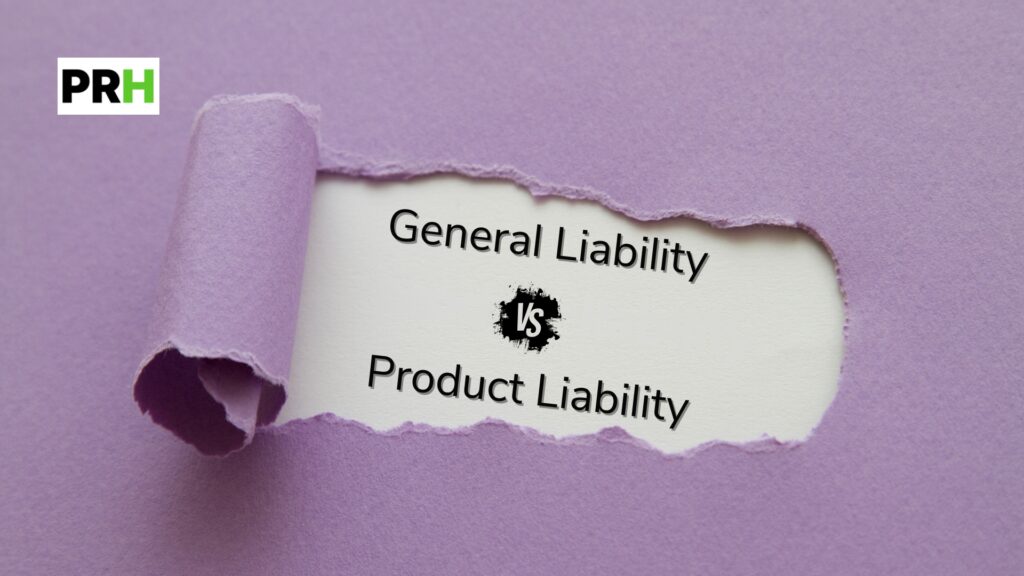

The right insurance coverage is the difference between a thriving party rental business and financial ruin. With approximately 18,000 emergency room visits annually from inflatable-related injuries and average liability claims ranging from $10,000 to over $100,000, party rental operators face significant exposure. This comprehensive guide breaks down the essential insurance coverages, explains how general liability differs from product liability, and provides the practical information needed to protect your business.
Understanding insurance isn’t just about compliance—it’s about ensuring that one accident doesn’t destroy years of hard work. Most venues, schools, and corporate clients now require proof of at least $1 million in general liability coverage before allowing equipment on their premises, making proper insurance both a legal necessity and a business requirement.
General liability protects against operational risks at events
General liability insurance forms the foundation of protection for party rental businesses. This coverage addresses third-party bodily injury, property damage, and advertising injury arising from your business operations. When a child breaks their arm falling in a bounce house, or your setup crew accidentally damages a client’s landscaping, general liability responds.
The coverage extends across several critical areas. Bodily injury protection covers medical costs, emergency services, and rehabilitation when guests are injured using your equipment. Property damage coverage pays for harm to venue property during setup, operation, or teardown—think damaged lawns from heavy inflatables or scratched floors from table deliveries. The policy also provides legal defense costs, paying attorney fees and court costs regardless of whether you’re found liable, plus any settlements or judgments up to policy limits.
For party rental businesses, most insurers recommend coverage of $1 million per occurrence with a $2 million aggregate limit. Larger operations or those serving corporate clients often carry $2 million per occurrence. These aren’t arbitrary figures—they reflect the reality that injury claims involving children can quickly escalate into six or seven figures, particularly when traumatic brain injuries or permanent disabilities occur.
The real-world scenarios where general liability protects bounce house operators paint a clear picture of its value. Coverage applies when guests collide during use and sustain injuries, when your delivery vehicle’s stakes tear up a carefully maintained lawn, or when an employee accidentally damages a fence during equipment installation. A documented case involved a bounce house incident at a school carnival where wind blew the inflatable across a football field, injuring 10 people—precisely the type of catastrophic event that makes adequate coverage essential.
What general liability does not cover creates dangerous gaps
Understanding exclusions prevents costly surprises when claims arise. General liability does not cover employee injuries—that requires separate workers’ compensation insurance. Vehicle accidents during delivery fall under commercial auto insurance, not general liability. And critically, injuries caused by defective products or equipment failures typically require product liability coverage.
Additional exclusions commonly found in party rental policies include pollution-related incidents, liquor-related liability, and property in your care, custody, or control. Some cheaper policies exclude wind damage—a particularly dangerous gap given that University of Georgia research documented 479 wind-related bounce house injuries and 28 deaths worldwide since 2000. Before purchasing any policy, operators must carefully review exclusions to understand exactly what isn’t covered.
Product liability addresses equipment defects and failures
Product liability insurance covers claims arising from defective products or equipment after they leave your control. While general liability protects against operational mishaps during setup or active supervision, product liability kicks in when a bounce house seam fails during use at a customer’s party, or when a rented chair collapses at an event after you’ve departed.
The coverage addresses three categories of defects. Manufacturing defects occur when a specific piece of equipment has production flaws—perhaps a bounce house seam was improperly sewn during manufacturing. Design defects involve inherent flaws affecting all units of a product, such as an inflatable slide designed at too steep an angle. Failure to warn claims arise from insufficient safety instructions or inadequate anchoring guidelines provided with equipment.
For party rental businesses, product liability is relevant across all equipment categories. Inflatables face obvious risks from blowaway incidents and structural failures. But tents and canopies can collapse due to pole failures or inadequate anchoring. Tables and chairs experience structural fatigue from repeated use—one Pennsylvania case resulted in an $800,000 settlement when a chair collapsed, causing serious back injury. Even concession equipment creates exposure through electrical malfunctions or burns.
The good news for business owners: most commercial general liability policies include product liability through a coverage section called “Products-Completed Operations.” This means purchasing a standard CGL policy typically provides both operational and product defect protection. However, operators should verify this coverage exists in their specific policy and confirm adequate limits—typically $1 million per occurrence with a $2 million products-completed operations aggregate.
Four additional coverages complete the protection picture
Beyond general and product liability, party rental businesses typically need several other insurance types to operate safely and legally.
Commercial auto insurance is essential because personal auto policies exclude business use. Your personal car insurance provides zero coverage when you’re delivering bounce houses to a customer’s backyard. Most operators carry $1 million combined single limit coverage for their delivery vehicles, protecting against accidents, injuries to other drivers, and damage during transport. This coverage also extends to trailers used for hauling equipment.
Workers’ compensation requirements vary by state but affect most employers. California and New York require coverage for even one employee, while Florida’s threshold is four employees and Georgia’s is three. Coverage pays for medical expenses, lost wages, and disability benefits when employees are injured during deliveries, setups, or takedowns. The consequences of non-compliance are severe: California treats lack of coverage as a criminal offense with fines starting at $10,000 per employee if injured without coverage, while New York can pursue felony charges with fines up to $50,000.
Equipment or inland marine insurance protects your actual inventory. Standard property insurance only covers equipment at your fixed location—it won’t pay when your $5,000 inflatable is damaged during transport or stolen from a customer’s property overnight. Inland marine coverage follows equipment wherever it goes, protecting against theft, vandalism, fire, and weather damage. Given that $1 billion in equipment is stolen annually from work sites across industries, this coverage protects significant capital investment.
Umbrella policies provide additional liability coverage beyond primary policy limits. When a catastrophic incident results in a $2 million judgment but your general liability policy only covers $1 million, an umbrella policy pays the difference. Party rental businesses typically purchase $1-2 million in umbrella coverage, though some large venues now require $4-5 million in total liability protection.
Venues require proof of insurance before every setup
The certificate of insurance has become the universal ticket for party rental operators to access venues. Schools, parks, churches, and corporate clients all require documented proof of coverage before allowing equipment on premises—and most require being named as an “additional insured” on your policy.
Timing matters significantly. Parks and community centers typically require certificate submission 14-30 days before events. Schools verify insurance coverage and often require both general liability and workers’ compensation documentation. Churches may additionally require background checks for workers interacting with children. Corporate events typically demand the highest coverage levels, frequently requiring $2 million or more in liability protection.
Being named as “additional insured” means the venue gains protection under your policy for claims arising from your operations. This requires a formal endorsement to your policy—the certificate of insurance alone isn’t sufficient. Most insurers charge $25-50 per additional insured certificate, and operators should allow 7-14 days for processing. Building relationships with venues by consistently providing accurate, timely certificates creates competitive advantage and repeat booking opportunities.
Inflatables face stricter insurance scrutiny than other party equipment. Some states impose specific regulatory requirements—Texas, for example, requires $1 million per occurrence liability for bounce houses and mandates inspection certificates. Insurance companies also distinguish between traditional party rentals and “pay for play” operations where customers are charged per person to use equipment, with the latter commanding significantly higher premiums due to increased exposure.
Premium costs range widely based on business characteristics
Insurance costs for party rental businesses vary substantially based on equipment types, location, claims history, and business size. Understanding these factors helps operators budget appropriately and identify opportunities for savings.
General liability premiums for bounce house and party rental businesses typically range from $500 to $2,500 annually for $1 million in coverage. Startups may face minimum premiums around $1,790 from specialist insurers, while established operators with clean records can find coverage for $60-80 monthly. Workers’ compensation averages $35-47 monthly depending on state, with North Carolina among the cheapest and New York the most expensive. A complete insurance bundle—combining general liability, property, professional liability, and workers’ compensation—typically costs $2,500-3,000 annually for a small operation.
Equipment type significantly affects premiums. Standard bounce houses fall into lower risk categories, while water slides, obstacle courses, and mechanical bulls drive substantially higher rates. Mechanical bulls in bars represent nearly uninsurable risk due to alcohol involvement. Insurers classify inflatable slides, sumo suits, knocker balls, and jousts among the highest-claims equipment.
Geographic location creates meaningful cost differences. Operators in Maine pay roughly $31 monthly for workers’ compensation while New York operators pay $47 for equivalent coverage. States with higher litigation rates—California, New York, New Jersey—consistently show higher premiums across all coverage types. Urban locations with higher theft rates may see property coverage premiums 15-20% higher than rural areas.
Claims history remains the single most significant factor affecting future rates. A clean record spanning three or more years can reduce premiums 10-25%, while frequent claims lead to non-renewal and difficulty finding coverage at any price. SIOTO certification (Safe Inflatable Operators Training Organization) demonstrates professionalism and may qualify for insurer discounts of 5-15%.
Common mistakes leave business owners exposed
The most dangerous misconception among party rental operators is believing general liability covers everything. It doesn’t cover employee injuries, vehicle accidents, equipment damage, or business interruption. Operators who skip workers’ compensation, run delivery vehicles on personal auto policies, or fail to insure their equipment inventory face catastrophic exposure when incidents occur.
Assuming homeowner’s insurance covers a side business represents another critical error. Personal homeowner’s policies typically contain explicit business exclusions, and some carriers cancel policies entirely upon discovering bounce house operations on the premises. Similarly, personal auto insurance excludes business use—driving your personal vehicle while hauling rental equipment means driving uninsured.
Not reading policy exclusions creates dangerous coverage gaps. Cheaper policies may exclude wind damage (devastating for inflatables), improper setup claims, or loading/unloading incidents. Some policies exclude sexual abuse and molestation coverage, liquor liability, or assault and battery—all potentially relevant for party events. Business owners must request and review the actual policy documents, not just the marketing materials.
Under-insuring equipment value or failing to update coverage as the business grows leaves operators exposed. Equipment should be insured at full replacement cost, not depreciated actual cash value. Operators must update coverage when adding new inflatables, expanding service areas, or hiring employees. Annual policy reviews should compare at least three providers and confirm coverage matches current business operations.
Working with specialized insurers simplifies coverage
General insurance agents often lack expertise in party rental risks and may either overprice coverage or leave dangerous gaps. Industry-specialized insurers understand the unique exposures and provide appropriate coverage. Leading options include Cossio Insurance (widely recognized as the industry leader for inflatables), The Hartford (offering competitive rates and strong claims service), NEXT Insurance (digital-first with quick quotes), and XINSURANCE (specializing in hard-to-place risks including operators with claims history).
When shopping for coverage, operators should ask specific questions: Does wind damage coverage apply to inflatables? How quickly can certificates be issued for last-minute bookings? Are loading/unloading incidents covered under general liability or auto? Does coverage extend across all states where you operate? How are additional insured endorsements handled and priced?
Bundling policies through a single carrier saves 20-30% compared to purchasing separately. A Business Owner’s Policy combines general liability, commercial property, and business interruption coverage at discounted rates. Paying annually rather than monthly saves an additional 5-10% and eliminates processing fees. Higher deductibles on property coverage reduce premiums, though operators should keep liability deductibles low since injury claims escalate quickly.
Conclusion
Insurance for party rental businesses isn’t optional—it’s the foundation that allows sustainable growth without existential risk. The core protection comes from general liability coverage at minimum $1 million per occurrence with products-completed operations included, supplemented by workers’ compensation, commercial auto, and equipment coverage based on specific business operations.
The most critical insight for operators: insurance must match your actual business activities. Coverage gaps kill businesses. The operator running delivery vehicles on personal auto policies, skipping workers’ compensation for “occasional” helpers, or assuming general liability covers everything faces the very real possibility that one incident will eliminate everything they’ve built. Working with specialized insurers, reading policy exclusions carefully, and updating coverage as the business grows transforms insurance from a necessary expense into genuine protection for your livelihood and your customers.