


For party rental and bounce house businesses, success in 2025-2026 hinges on a strategic shift from passive marketing to active community building. The most effective operators are treating community engagement as a core business function—not an afterthought—with proactive strategies generating 4x higher conversion rates than reactive approaches. Facebook groups, review management, and local partnerships form the foundation, while AI tools and short-form video content are emerging as critical differentiators for businesses willing to invest early.
The $20.46 billion global party rental market is growing at 13.5% annually, creating intense competition for family-focused businesses. Parents now spend 30% more on children’s parties than in 2023, but they’re also more discerning—99.9% consult reviews before booking, and 84% trust online reviews as much as personal recommendations. This research provides practical, implementable strategies across six key domains.
Facebook groups and local parent networks drive the highest-quality leads
Facebook remains the most powerful platform for party rental community engagement, with 1.8 billion monthly group users and a new October 2024 redesign emphasizing local content discovery. The new “Local” tab consolidates Marketplace, Groups, and Events, making it easier for families to discover nearby party services.
Effective Facebook community strategies center on positioning yourself as a trusted resource rather than a vendor. Businesses creating “Party Planning Parents of [City]” groups—focused on serving members rather than promoting services—report substantially higher engagement and referral rates. Members naturally recommend businesses when relevant needs arise in discussion threads. The key is contributing value generously without expecting immediate returns.
For party rental businesses, private visible groups work best—they’re discoverable but create a sense of exclusivity that drives membership. Effective groups offer early access to new equipment, exclusive discounts, party planning tips, and community support. Posting consistency matters: a Monday planning tip, Wednesday poll (asking about favorite party venues), and Friday customer spotlight creates reliable engagement rhythms.
Facebook’s enhanced local features mean over 60% of users now search for local businesses directly through Facebook rather than Google. Optimizing your business page with complete service area information, current photos of equipment setups, and weekly Google Posts directly impacts local visibility.
Instagram Reels and TikTok behind-the-scenes content outperform polished marketing
Short-form video has become the dominant engagement format, with Instagram Reels showing 57.4% year-over-year growth and 73% of consumers actively seeking this content format. For party rental businesses, authentic behind-the-scenes content dramatically outperforms professional marketing.
The most effective video formats for this industry include:
- Transformation videos: Empty venue to fully-decorated party setup in 15-30 seconds
- Day-in-the-life content: Following multiple Saturday event setups creates connection
- Equipment demonstrations: Bounce house inflation sequences, safety checks, cleaning processes
- POV formats: “POV: You hired us for your kid’s birthday party” resonates strongly
Posts with location tags receive 79% higher engagement, making consistent geotagging essential. Using 3-5 location-based hashtags (#[City]Events, #[City]Moms) alongside industry tags (#bouncehouserentals, #birthdaypartyideas) maximizes local discovery. The sweet spot for hashtag targeting is accounts with 10K-200K posts—specific enough to be relevant, broad enough for visibility.
Micro-influencer partnerships deliver exceptional returns for local businesses, with an average $4.12 ROI per dollar spent and engagement rates 60% higher than celebrity influencers. Local mom bloggers with 5K-50K followers are ideal partners—a free rental in exchange for honest coverage creates authentic content that resonates with target audiences.
Nextdoor offers underutilized hyperlocal trust-building opportunities
With one-third of American homes on the platform and users 2.4x more likely to perceive ads as trustworthy compared to other platforms, Nextdoor represents a significant opportunity most party rental businesses underutilize. The platform’s recommendation-based discovery system means 79% of neighbors are influenced by Nextdoor recommendations when choosing local businesses.
Effective Nextdoor strategies require authenticity over advertising. Business pages need complete profiles and at least one recommendation to become visible in local searches. The key insight from Nextdoor’s 2024 research: ads without logos achieve 22% higher click-through rates for direct response campaigns, and location personalization in copy increases engagement by 17%. Focus on practical benefits and speak directly to neighbors rather than using traditional marketing language.
Monitoring recommendation requests and responding thoughtfully—while disclosing your business relationship—builds credibility over time. Businesses that participate genuinely in neighborhood discussions beyond their service area develop stronger reputations than those solely focused on promotion.
Local sponsorships and partnerships create compounding referral networks
Offline community involvement delivers substantial returns that compound over time. 63% of customers have higher opinions of businesses active in local chambers of commerce, and similar goodwill extends to community sponsors. Small businesses that invest in local sponsorships report that word-of-mouth and referrals generate the highest-quality leads at the lowest cost.
The most effective sponsorship approach for party rental businesses is in-kind rather than cash—donating equipment for team end-of-season parties, school carnivals, or church events costs less than direct payments while demonstrating your product to potential customers. Creating tiered sponsorship packages allows flexibility: Gold sponsors ($1,500) get logo placement on jerseys and banners; Silver ($750) gets team materials and social mentions; Bronze ($500) gets program recognition.
Strategic partnership networks multiply referral potential. The most valuable relationships for party rental businesses include:
- Event venues (commission-based referral arrangements)
- Event planners and photographers (mutual recommendation agreements)
- Catering companies and bakeries (package deals for shared customers)
- Schools and PE teachers (field days, carnivals, reward days)
- Churches (Vacation Bible School, fall festivals, community events)
Industry experts emphasize that a single strong relationship with an event planner can generate recurring revenue for years. One operator noted that befriending competitors—particularly businesses with complementary offerings—creates unexpected referral channels.

Review management requires systematic processes, not sporadic effort
Reviews have become the single most important trust signal for local service businesses. 97% of consumers conduct online searches for local businesses, and 92% require at least a 4-star rating before considering a service. For party rental businesses serving families, the stakes are even higher—parents scrutinize reviews for mentions of safety, professionalism, and child engagement.
Timing dramatically affects review generation success. Harvard Business Review research found that immediate review requests (next day) actually decrease likelihood of reviews, while delayed reminders (7-13 days) increase it. For event rental businesses, the optimal sequence is: initial request at service completion, follow-up email/text within 24-48 hours, and a final reminder one week later if no response. Wednesday and Saturday sends see highest conversion rates.
QR code review cards represent the highest-impact tactical change businesses can implement. Case studies show businesses moving from 3 reviews monthly to 30-40 reviews monthly after implementing QR codes on delivery receipts, invoices, and business cards. Email remains the most effective request method with 40% response rates, followed by in-person requests at 27%.
Response strategy matters as much as volume. Businesses that respond to all reviews see 88% of consumers willing to use their services, compared to only 47% for businesses that don’t respond. Critically, 30% of negative reviews may be reversed when companies respond professionally and offer solutions. The framework is straightforward: respond within 24-48 hours, acknowledge the issue without defensiveness, take ownership where appropriate, offer a specific solution, and move the conversation offline.
Proactive community building differentiates market leaders from followers
The shift from reactive to proactive community management separates thriving businesses from those constantly chasing new customers. Reactive businesses respond to comments and answer questions; proactive businesses initiate conversations, anticipate needs, and build communities around shared interests beyond transactions.
Proactive strategies for party rental businesses include birthday reminder programs (collecting children’s birthdates to send annual reminders with discounts), seasonal content calendars (publishing fall festival ideas before families start planning), and educational resources (party planning checklists, venue guides, budget tips). This positions the business as a trusted advisor rather than a vendor.
Brand advocacy programs leverage satisfied customers to expand reach exponentially. Effective programs use two-sided rewards—both the referrer and referred friend receive benefits. Tiered structures work well: 1-2 referrals earn $25 off the next rental; 3-5 referrals unlock free add-ons; 6+ referrals trigger premium upgrades. Some businesses use charitable models, donating a fixed amount per referral—appealing to community-minded families since 66% of consumers want businesses to be philanthropic.
User-generated content creates authentic social proof that outperforms professional marketing. 92% of consumers trust UGC more than traditional advertising, and products with reviews see 270% higher purchase likelihood. Creating shareable moments—photo opportunity signage, Instagram-worthy setups, branded elements visible in photos—encourages organic content creation. Monthly photo contests with simple entry requirements (post with hashtag, tag business) generate consistent content flow while increasing engagement.
Seasonal patterns require year-round strategy adaptation
Party rental businesses face significant seasonality, with up to 30% revenue drops during winter months and capacity constraints causing up to 30% of last-minute bookings to be declined during peak periods. Effective community management accounts for these patterns rather than ignoring them.
Off-season community building prepares the ground for peak demand. This includes creating holiday-themed packages (Halloween bounce houses, Christmas party setups), promoting indoor options for venues with gymnasium space, and building relationships through educational content when booking pressure is lower. Birthday reminder programs launched in off-season pay dividends during peak months.
Social media timing should align with decision-making patterns. Friday afternoon posts (1-4 PM) capture weekend planners researching options. Pinterest sees highest engagement on weekend afternoons (Saturday 1 PM, Sunday 4 PM) when families plan events. For post-event follow-up, Tuesday-Wednesday requests generate highest review conversion rates. Pre-scheduling weekend content during quieter weekdays ensures consistent presence without competing with operational demands.
Parent decision-making prioritizes personal referrals above all other factors—65% reach out to befriended parents first when researching party services. Online reviews serve as the secondary validation layer. This means community-building efforts that generate word-of-mouth recommendations outperform direct marketing approaches over time.
Safety messaging and trust signals require prominent, consistent communication
Safety concerns are paramount for parents choosing party equipment. Over 2,500 injuries from inflatable equipment are documented annually, and a CHOC-led study found pediatric bounce house injuries have increased steadily over two decades. Businesses that proactively address safety concerns convert more inquiries than those treating safety as secondary.
Essential trust signals include displaying insurance coverage prominently ($1-2 million general liability is standard), referencing commercial-grade ASTM-compliant equipment, and highlighting regular maintenance schedules. Creating dedicated safety pages with downloadable guidelines, children’s safety videos demonstrating proper use, and behind-the-scenes content showing cleaning and inspection processes all build confidence.
Staff training communication matters significantly. Parents want to know about attendant presence at events, background check policies, supervision protocols, and emergency response procedures. Digital waiver systems professionalize the booking process while ensuring proper documentation.
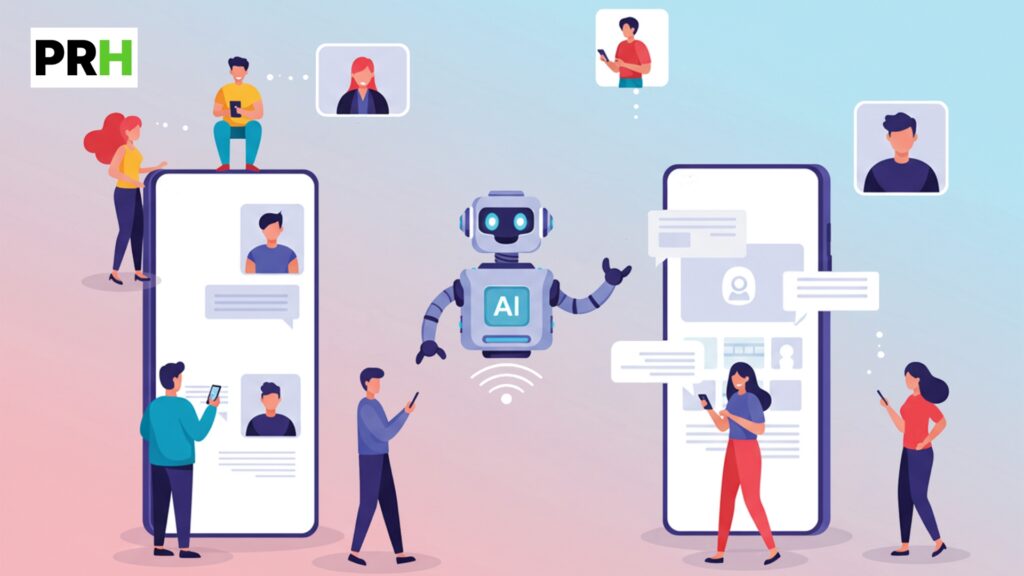
AI tools and platform changes reshape the competitive landscape for 2026
AI adoption in community management is accelerating rapidly, with 93% of marketers reporting positive outcomes from 2024 implementation and 89% planning budget increases. For party rental businesses, practical AI applications include automated scheduling based on availability, chatbots for common inquiries, personalized birthday reminders at scale, and AI-powered review response drafting (though human review remains essential).
Local SEO is transforming as AI-driven results increasingly influence discovery. Google’s AI Overviews doubled in presence (6.5% to 13.1%) between January and March 2025. Critically, AI synthesizes review themes—speed, quality, friendliness—when determining which businesses to surface. Businesses with consistently positive review themes and regular response patterns rank higher in AI recommendations.
Voice search optimization becomes increasingly important, with 153.5 million U.S. users relying on voice assistants. 58% use voice search to find local business information. Optimization requires conversational long-tail keywords (“Where can I rent a bounce house near me today?”), FAQ content structured for voice answers, and fast-loading pages (voice results load 52% faster than average).
Emerging platforms worth monitoring include Threads (320+ million monthly users), Bluesky’s community features, and Reddit’s growing influence in local discovery (40% organic traffic increase in 2024). WhatsApp Business communities offer exceptional engagement with 98% message open rates versus 20-30% for email—though marketing message restrictions are increasing in the U.S.
Implementation roadmap prioritizes high-impact, low-effort actions first
Immediate actions (Week 1): Create branded hashtag for customer content, add “How did you hear about us?” to booking process, enable QR code review cards for delivery staff, and ensure Google Business Profile completeness with current photos.
30-day goals: Launch a local party planning Facebook group, identify 3-5 local mom influencers for partnership outreach, implement systematic review request timing, and build referral partnership proposals for 3 complementary businesses.
Ongoing practices: Post 3-5 times weekly on primary platforms, respond to all reviews and comments within 24 hours, feature customer content weekly, track referral sources monthly, and send birthday reminders to past customers on automated schedule.
The businesses that will thrive in 2026 are those building community relationships today. Reactive marketing captures customers already searching; proactive community building creates demand before competitors enter the conversation. The investment in systematic community management pays compounding returns as word-of-mouth networks expand and brand advocates multiply.