

Google’s AI Overviews have fundamentally changed how potential customers discover local service businesses. Here’s the good news for party rental operators: local searches remain remarkably resilient to AI disruption. Research from a 60,000-search study found that AI Overviews appear in only 17.2% of commercial local queries—meaning traditional search visibility still dominates when customers are ready to book. Yet optimizing for AI-generated answers creates new opportunities to capture research-phase customers before they even start comparing competitors.
This guide provides actionable strategies specifically for bounce house rental and party equipment businesses to strengthen their visibility across both traditional search results and Google’s AI-powered features. Every recommendation here can be implemented by busy operators without extensive technical knowledge.
Understanding how Google selects businesses for AI answers
Google’s AI Overviews use the Gemini language model to synthesize information from multiple sources into unified responses. The system follows a “query fan-out” technique—simultaneously searching multiple related subtopics before combining findings. For party rental businesses, this means Google might pull your safety information, pricing details, and customer reviews into a single response about “planning a backyard birthday party.”
Three critical factors determine whether your business gets cited:
First, your content must already rank reasonably well. Studies analyzing 1.9 million AI Overview citations found that 76% come from pages ranking in Google’s top 10 organic results. However, about 24% of citations come from pages outside the top 10, creating opportunities for smaller businesses with exceptionally helpful content.
Second, Google heavily weighs E-E-A-T signals—Experience, Expertise, Authoritativeness, and Trustworthiness. For local service businesses, this translates to demonstrated real-world experience serving customers, comprehensive knowledge of your services, recognition from other authoritative sources, and transparent business practices.
Third, content structure matters enormously. 78% of AI Overviews contain either ordered or unordered lists, and Google strongly prefers content organized with clear headings, direct answers, and scannable formatting. The AI needs to easily extract and quote specific passages.
One surprising finding: longer content doesn’t automatically win. Analysis of 174,000 cited pages revealed that 53% are under 1,000 words. Match your content length to the question being answered—comprehensive when the topic demands it, concise when brevity serves customers better.
Why local searches are actually protected from AI disruption
Party rental businesses operate in a uniquely favorable position. Research shows that queries containing specific location names are 11% less likely to trigger AI Overviews. When someone searches “bounce house rental Dallas” or “party equipment near me,” they’re far more likely to see the traditional local pack results where your Google Business Profile appears.
Commercial and transactional queries—the searches from customers ready to book—trigger AI Overviews least frequently. This means your most valuable search traffic remains largely intact. AI Overviews predominantly appear for informational queries like “are bounce houses safe for toddlers” or “how to plan a kids birthday party.”
The strategic implication is clear: optimize your Google Business Profile and traditional local SEO for high-intent booking searches, while creating helpful informational content to capture customers during their research phase through AI Overviews.
Your Google Business Profile is now more important than ever
Google’s AI systems cite Google Business Profile data more frequently than external websites for local queries. Your GBP functions as a structured data feed that AI can instantly consume and quote.
Complete every available field in your profile. Set your primary category to “Party Equipment Rental Service” and add relevant secondary categories like bounce house rental, tent rental, and event equipment rental. For service-area businesses that travel to customers, meticulously list every city, town, and ZIP code you serve—these become your primary visibility signals since you can’t display a physical address.
Build out your products and services section with detailed listings. Add individual entries for each product type—bounce houses, water slides, obstacle courses, tables, chairs, tents—with descriptions, pricing ranges, and photos. This information appears in AI snapshots for specific queries like “inflatable water slide rental [city].”
Post weekly updates using question-based formats. Content structured as questions that mirror customer searches performs better in AI systems. Instead of “Summer specials now available,” try “Planning a graduation party in [City]? Here’s what families are booking this summer…” Practitioners report that question-based posts get picked up more frequently in AI-generated answers.
Rename images before uploading them. Files named “bounce-house-dallas-birthday-party.jpg” provide more context than “IMG_4532.jpg.” Include photos from actual events you’ve worked, ideally geotagged, showing your equipment in real customer backyards and venues.
Creating content that AI systems want to cite
The content most frequently cited in AI Overviews shares consistent structural characteristics. Understanding these patterns helps you create pages that serve both human visitors and AI extraction.
Lead with direct answers. Place your core answer in the first 40-60 words of each section. Don’t build up to the point—state it immediately, then expand with supporting details. If someone asks “How far in advance should I book a bounce house?”, your page should begin with “Book your bounce house rental 2-3 weeks in advance for weekend events, or 4-6 weeks ahead for peak season dates in May through August…”
Use clear heading hierarchy. Structure your pages with H2 and H3 headings that mirror actual customer questions. “What size bounce house do I need?” works better than “Sizing Information.” These question-formatted headings signal to AI systems exactly what each section answers.
Format information in scannable lists and tables. Since 78% of AI Overviews contain lists, organize appropriate content this way:
- Safety guidelines for specific age groups
- What’s included with each rental package
- Delivery area pricing by zone
- Setup requirements and specifications
- Weather policies and backup options
Tables work exceptionally well for comparisons, pricing tiers, and equipment specifications—data that AI can easily extract and present.
Keep paragraphs short. Aim for 2-5 sentences per paragraph, with one clear idea per block. Short paragraphs help AI systems identify and extract specific pieces of information without pulling in unrelated content.
Building FAQ content that gets selected by AI
FAQ pages consistently rank among the highest-cited content types in AI Overviews. Google’s systems can easily identify question-answer pairs and extract precisely relevant information.
Write questions exactly as customers phrase them. Use conversational language matching how people actually speak: “Do you deliver to [City]?” instead of “Delivery Service Areas.” Keep questions under 80 characters—concise enough to match natural queries.
Craft answers that are complete but focused. Each answer should be 30-50 words—direct, relevant, and self-contained. Avoid promotional language or vague responses. The answer should fully satisfy the question without requiring additional context.
Distribute FAQs strategically across your site. Rather than one massive FAQ page, add relevant questions to service pages, city pages, and product pages. A page about water slide rentals should include questions specific to water slides. Your Dallas service area page should address Dallas-specific concerns like delivery fees and popular venues.
Implement FAQ schema markup. This structured data helps search engines identify your question-answer content and significantly increases the likelihood of citation. The markup doesn’t require advanced technical skills—many website platforms offer FAQ schema plugins, or you can add the code directly to your pages.
Create FAQ content addressing the questions customers actually ask: What’s included in the rental price? How early can you set up? What happens if it rains? Do you provide supervision? What about insurance? How much space do I need? Each question-answer pair becomes a potential citation opportunity.
City pages that capture local searches and AI citations
For service-area businesses without a physical storefront, city-specific landing pages enable rankings in locations throughout your delivery zone. These pages have shown 173% increases in tracked keyword positions when done correctly, and they’re now appearing in AI Overviews for local queries.
Each city page needs genuinely unique content. Simply swapping city names on template text creates duplicate content problems. Instead, include specific information about serving that area: local parks and venues where you frequently deliver, neighborhood-specific testimonials, area delivery fees, and references to local events or seasonal patterns.
Structure city pages for both humans and AI:
Start with a clear headline: “Bounce House Rentals in [City], TX.” Follow with a brief paragraph explaining your service to that area, mentioning surrounding neighborhoods. Include a section describing popular delivery locations—community centers, local parks, event venues. Add customer testimonials from that city, ideally mentioning specific neighborhoods or experiences. Create an FAQ section addressing city-specific questions: delivery fees, service hours, booking lead time for that area.
Embed a map showing your service coverage. This helps customers visually confirm you serve their location and provides geographic context for search engines.
Avoid creating pages for cities you don’t meaningfully serve. Start with your 3-5 most important markets, ensure each page provides genuine value, then expand to additional locations over time. Quality matters far more than quantity.
Technical foundations that make AI citation possible
Your content can only appear in AI Overviews if Google can properly crawl, index, and understand your website. Several technical factors directly influence visibility.
Site speed affects both rankings and AI citation likelihood. Pages should load in under 2.5 seconds, with interaction responsiveness under 200 milliseconds. Compress images using WebP format, enable browser caching, and minimize the scripts loading on each page. Use Google’s PageSpeed Insights tool to identify specific improvements.
Mobile optimization is non-negotiable. Google uses mobile-first indexing, meaning the mobile version of your site determines rankings. Ensure text is readable without zooming, buttons are large enough to tap easily, and there’s no horizontal scrolling required.
Implement structured data markup. For party rental businesses, prioritize LocalBusiness schema (core business information), Service schema (detailed service descriptions), FAQ schema (question-answer content), and Review/AggregateRating schema (customer feedback). This structured data helps AI systems understand your content and increases citation probability.
Ensure basic crawlability. Confirm your robots.txt file doesn’t block important pages, create an XML sitemap, and fix any crawl errors appearing in Google Search Console. These fundamentals must be in place before AI optimization matters.
Demonstrating expertise and authority in your market
E-E-A-T signals heavily influence AI citation decisions. Google’s systems assess whether content comes from genuinely knowledgeable, experienced sources before including it in AI Overviews.
Showcase real experience through customer stories. Document completed events with photos showing your equipment in actual use. Share case studies describing how you solved specific customer challenges—a last-minute booking, a tricky backyard setup, weather complications you navigated. Video testimonials from satisfied customers provide powerful experience signals.
Demonstrate expertise through comprehensive educational content. Create detailed guides covering bounce house safety practices, party planning timelines, equipment selection for different age groups, and setup requirements. Address the questions customers have throughout their planning process, not just when they’re ready to book.
Build authority through community presence. Participate in local business associations, sponsor community events, partner with complementary businesses like photographers and caterers. Earn mentions in local news coverage and community websites. These external signals validate your business reputation.
Establish trustworthiness through transparency. Display licenses, insurance coverage, and safety certifications prominently. Provide clear pricing information or quote processes. Maintain accurate contact information and respond promptly to inquiries. These trust signals matter both to customers and AI evaluation systems.
The review strategy that influences AI visibility
Google AI Overviews now cite individual customer reviews directly. Beyond their role in traditional local rankings, reviews provide rich data that AI systems analyze when evaluating and recommending businesses.
Implement systematic review requests after each rental. Don’t leave reviews to chance—build a process that requests feedback following every event. The recency and volume of reviews signal ongoing customer satisfaction.
Encourage specific feedback in reviews. Guide customers to mention the city or neighborhood, the type of event, specific products they rented, and what made the experience positive. “The team delivered a perfect bounce house for my daughter’s 5th birthday in Brookside—setup was quick and the kids loved it” provides far more useful information than “Great service!”
Respond thoughtfully to every review. Thank customers for positive feedback and address concerns professionally in negative reviews. Response patterns demonstrate engagement and customer care. Research shows 88% of consumers prefer businesses that respond to reviews.
Monitor reviews across platforms. Beyond Google, track feedback on Yelp, Facebook, and any industry-specific directories. Consistency across platforms strengthens trust signals.
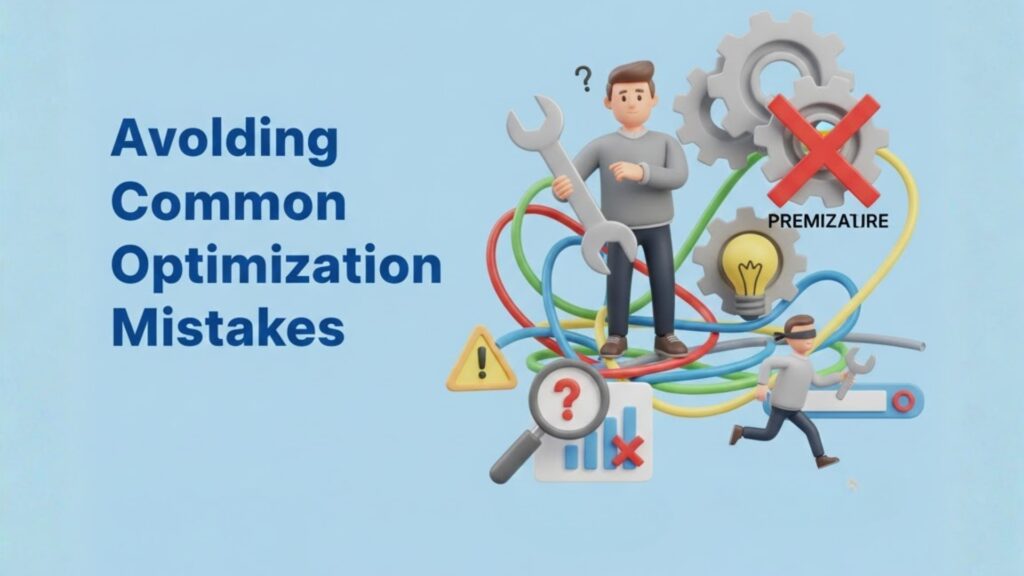
Avoiding common optimization mistakes
Several practices that seem logical actually hurt AI visibility. Understanding these pitfalls saves wasted effort.
Don’t publish AI-generated content without substantial human editing. Google specifically identifies content lacking human insight, experience, or original thinking. Use AI tools for research or drafts, but ensure final content reflects your genuine expertise and voice.
Avoid thin, templated city pages. Creating dozens of location pages with minimal unique content triggers duplicate content issues and provides no real value. Each page should genuinely help someone in that specific location.
Don’t stuff keywords unnaturally. Repeating “bounce house rental Dallas” fifteen times on a page doesn’t improve visibility—it degrades readability and signals manipulation. Write naturally for humans; search engines are sophisticated enough to understand your content without repetition.
Don’t neglect your Google Business Profile in favor of website content. For local searches, GBP data often matters more than website content. Many party rental operators focus entirely on their website while leaving their profile incomplete.
Don’t ignore mobile and speed issues. Technical problems make your content invisible regardless of quality. Address technical foundations before creating new content.
Measuring success and adapting your approach
Track visibility across both traditional rankings and AI features. Google Search Console shows organic performance, while specialized tools from SEMrush, Ahrefs, or SE Ranking can monitor AI Overview appearances for your target keywords.
Focus on keywords with informational intent for AI visibility tracking—”how to choose a bounce house,” “bounce house safety tips,” “party planning guide”—while monitoring commercial terms for traditional rankings.
AI Overviews continue evolving rapidly. Google reduced average AI Overview length by 70% between July and August 2025, indicating ongoing refinement. Strategies that work today may need adjustment. Build a content foundation focused on genuinely helping customers rather than gaming specific features, and you’ll maintain visibility regardless of algorithmic changes.
Putting this into practice
Start with immediate impact: audit and complete your Google Business Profile, verify NAP consistency across all online listings, and request reviews systematically. These actions require minimal time and provide foundational benefits.
In the coming months, create or optimize city pages for your top 3-5 service areas, build comprehensive FAQ content answering real customer questions, and implement LocalBusiness and FAQ schema markup. These projects require more effort but position you for both traditional search visibility and AI citation opportunities.
Ongoing, post weekly GBP updates, expand your city page coverage, build local citations and brand mentions through community involvement, and monitor your visibility across search features. The businesses that consistently create helpful content while maintaining technical foundations will capture customers at every stage of their planning journey—whether they’re asking Google a question or ready to book their party rental today.