
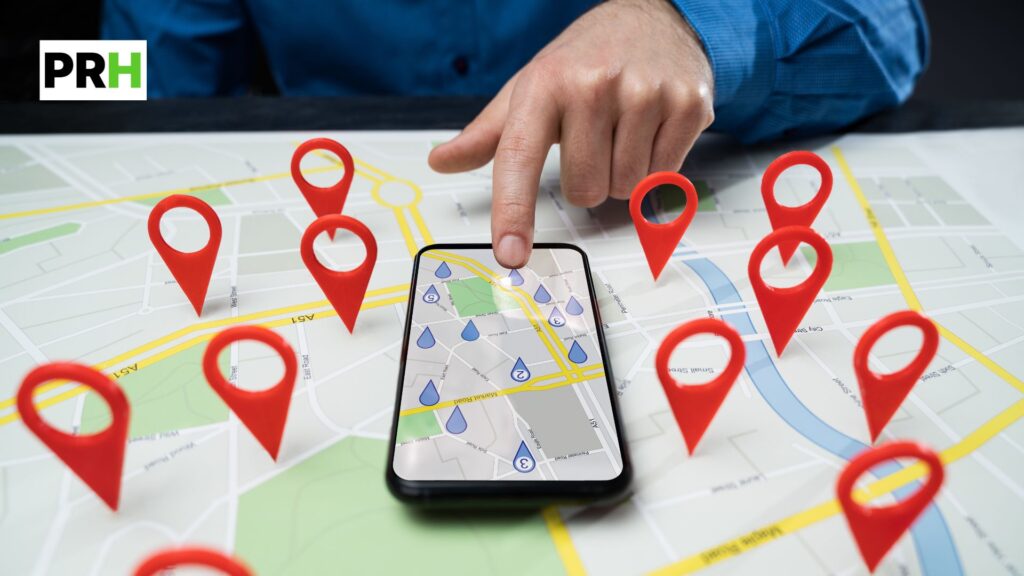

Party rental, bounce house, and event equipment businesses with multiple locations face a unique SEO challenge: how do you dominate local search across different states and regions without creating duplicate content or confusing Google? The answer lies in strategic website architecture, meticulous Google Business Profile management, and location-specific content that earns local trust. This guide synthesizes current best practices from 2024-2025 to help multi-location service businesses build a scalable local SEO foundation.
Subfolders beat subdomains for multi-location sites
The most debated question in multi-location SEO—whether to use subdomains, subfolders, or separate domains—now has a clear consensus. Subfolders (subdirectories) are the recommended approach for businesses with 10+ locations.
When G2.com moved their blog to a subdomain, it took months for Google to build trust in that subdomain despite the site having a DR 88 rating and generating 750,000+ monthly visitors. This real-world example illustrates why SEO experts from Moz, Semrush, and BrightLocal consistently recommend subfolders: they consolidate domain authority, allow link equity to flow throughout the site, and simplify management with one CMS and one analytics property.
The recommended URL structure for multi-state businesses uses a hierarchical approach:
- yourbusiness.com/locations/ → All locations hub page
- yourbusiness.com/locations/texas/ → State-level page listing all Texas cities
- yourbusiness.com/locations/texas/houston/ → Individual city location page
For businesses with fewer than 20 locations, a simpler structure works: /locations/houston-tx/. The key is including both city and state in URLs to avoid confusion between locations like Houston, Texas and Houston, Minnesota. Keep URLs lowercase with hyphens, static rather than dynamic, and consistent across the entire site.
Location landing pages need genuine local value
Each location page must justify its existence with unique, valuable content—not just city names swapped into templates. A study cited by BrightLocal found a 107% lift in rankings when businesses used hyperlocal content on location landing pages. The minimum recommended length is 500-1,000 words, though quality and relevance matter more than word count.
Essential elements for every location page include NAP (Name, Address, Phone), operating hours, an embedded Google Map, LocalBusiness schema markup, and location-specific images showing your team or equipment at that location. High-performing pages add local testimonials mentioning the specific area, staff bios for that location, driving directions referencing nearby landmarks, service area maps, and location-specific promotions.
The critical test: if you can copy content to another location page and it remains accurate, that content isn’t unique enough. Each page needs references to local event venues, community involvement, neighborhood descriptions, and area-specific FAQs that could only apply to that location.

Managing 10+ Google Business Profiles efficiently
Google provides bulk management tools specifically for businesses with 10 or more locations. The process begins by creating a Google account using your business domain email, then establishing a Business Group (formerly called business accounts) that allows shared management and location-based advertising campaigns. You’ll upload all business information via Google’s spreadsheet template, fix any errors, then request bulk verification—which typically takes about one week for approval.
Organizing profiles strategically makes ongoing management sustainable. Create business groups by region (“Southeast Region,” “Midwest Operations”) or function, then assign regional managers selective access to their specific groups. Use standardized store codes like “PARTYRENT-001” and consistent naming conventions such as “Party Pro Rentals – [City Name]” across all profiles.
NAP consistency is non-negotiable
NAP (Name, Address, Phone) consistency ranks among the top five local ranking factors for both Local Pack and organic search results. Inconsistent NAP can cause up to 73% loss in consumer trust and impact local performance by as much as 16%.
Even minor variations create problems. Using “Street” on some listings and “St.” on others, inconsistent phone number formats, or occasionally including “LLC” in the business name all fragment your local SEO signals. Create a master NAP document with exact formatting for each location and audit all citations quarterly. The priority directories for consistency are Google Business Profile, Apple Maps, Bing Places, Facebook, and Yelp.
Service area businesses require special attention
Party rental businesses typically operate as service area businesses (SABs), which creates unique eligibility requirements for multiple GBP listings. A business can have multiple listings only when different staff or teams serve different areas, service areas do not overlap, and each location operates independently.
Critical insight from Sterling Sky’s research: service area settings do NOT directly impact rankings. Rankings are based on the verified physical address, not the listed service area. Adding more service areas doesn’t improve visibility in those areas—it only shows potential customers your coverage on Maps. For party rentals, use your physical warehouse or storage facility address (even if customers don’t visit), hide the address if appropriate, and focus on realistic delivery radius (typically 30-50 miles).
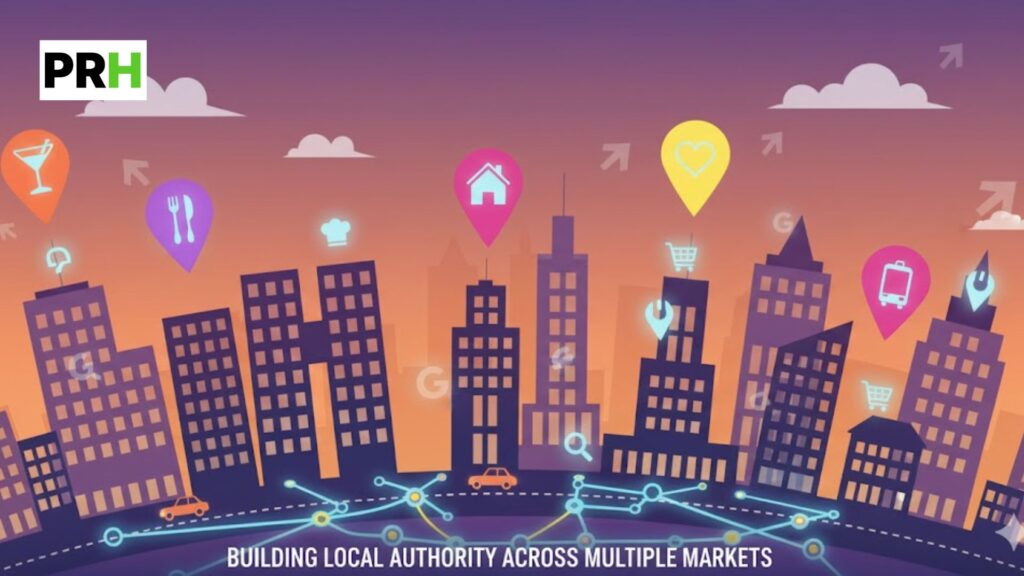
Building local authority across multiple markets
State-specific keyword targeting requires creating unique location pages for each service area while understanding that Google adjusts results based on user location down to the zip code level. Distance from the searcher is the #1 ranking factor for the Local Pack, which means businesses must build local signals for each market rather than relying on corporate-level authority.
Citation building at scale
Citations remain a fundamental ranking factor, though their importance has declined slightly compared to reviews and GBP signals. For multi-location businesses, the most efficient approach uses data aggregators that push information to hundreds of directories automatically. The priority aggregators are Data Axle (formerly Infogroup), Neustar/Localeze, and Foursquare.
Before building new citations, audit existing ones to find and fix inconsistencies. Create a “Golden NAP” master spreadsheet with verified information for each location before any submissions. For service area businesses specifically, BrightLocal and similar services offer SAB-specific citation packages covering 40+ sites that accept listings without displayed physical addresses.
Local link building that scales
Local sponsorships represent the most effective link-building strategy for event rental businesses because they naturally align with your customer base. Sponsoring youth sports teams, school fundraisers, charity events, and local festivals generates backlinks from event websites, local news coverage, and community pages. Use search operators like inurl:sponsors “City name” to find opportunities.
Each local link should point to the corresponding location landing page, not the homepage. Links from entities in the same geographic location carry significantly more weight for local rankings. Community partnerships with event venues, caterers, photographers, and DJs create natural cross-promotion opportunities, while local Chamber of Commerce memberships typically include website listings with valuable backlinks.
Review management drives rankings
Review recency is now a top-5 ranking factor according to Whitespark’s 2025 Local Search Ranking Factors study—businesses that stop getting new reviews see rankings drop. Additionally, 91% of consumers say local branch reviews impact their overall perception of big brands, and 88% would use a business that responds to all reviews compared to only 47% for businesses that don’t respond.
For businesses with 10+ locations, a hybrid management model works best: corporate sets guidelines, templates, and escalation procedures while individual locations handle routine responses. Negative reviews or major complaints escalate to corporate, with weekly reporting to headquarters. Respond to all reviews within 24-48 hours (more than half of consumers expect responses within 2-3 days), and aim for consistent review velocity rather than bursts of activity.
Schema markup implementation for multiple locations
The correct architecture uses Organization schema on the homepage (representing the parent company) and LocalBusiness schema on each individual location page, with parentOrganization properties linking them together.
For each location page, include required properties (name and address) plus recommended properties: geo (latitude/longitude to 5 decimal places), telephone, url, openingHoursSpecification, priceRange, and areaServed. Since party rental businesses deliver equipment, the areaServed property is essential—implement it using City or State types listing your service areas, or use GeoCircle with a specific radius in meters.
Example structure linking locations to parent organization:
{
“@type”: “LocalBusiness”,
“@id”: “https://example.com/locations/dallas/#LocalBusiness”,
“name”: “ABC Party Rentals – Dallas”,
“parentOrganization”: {
“@id”: “https://example.com/#Organization”
}
}
The homepage Organization schema should include a subOrganization array referencing each location’s @id. This semantic linking helps Google understand your multi-location business structure. Validate all schema using Google’s Rich Results Test and monitor structured data reports in Search Console weekly.
Content strategy: the 70/30 approach
Creating unique content for 10+ locations requires a scalable system. The 70/30 approach from Search Engine Journal works well: 70% can be programmatic or templated (service offerings, pricing, company information) while 30% must be manual and unique (local differentiators, community references, location-specific testimonials).
Google does not penalize multi-location businesses for similar content across location pages when done properly. However, thin or doorway pages—where 99% of content is identical with only city names changed—will be filtered from results. The distinction matters: localized content serving genuine user needs is acceptable; template spam trying to game local search is not.
For party rental businesses specifically, location pages should reference popular local event venues, mention typical events in the area (school graduations, local festivals), include specific neighborhoods within delivery zones, address weather considerations unique to each state, and highlight equipment popular for regional events. Create a location content questionnaire for each manager to complete, gathering unique local information that makes each page genuinely valuable.
Blog content should follow a centralized approach for brand authority while supporting individual locations through strategic internal linking and location tagging. Write posts like “Top 10 Outdoor Party Venues in [City]” that naturally link to relevant location pages, and feature real customer stories from specific markets.
Avoiding critical multi-location mistakes
The most damaging multi-location SEO mistakes involve NAP inconsistencies and listing duplicates. Google flags potential duplicate listings based on identical or shared phone numbers, same addresses for different listings, overlapping service areas for SABs, and identical business names without unique identifiers. Video verification may be required for some locations, and bulk verification requirements have tightened—you must have 10+ legitimate, distinct locations.
Real consequences include listing suspension (entire account suspended for guideline violations), filtering (listings don’t appear in Local Pack), and complete removal of duplicate or fake listings. One case study involved a business that kept the same phone number after moving locations and lost top 3 position for 2 years due to NAP confusion.
Citation inconsistencies spread through the business data ecosystem like a virus. Data aggregators share information with directories, which share with other directories—making cleanup extremely time-consuming. According to BrightLocal’s founder, “citation inconsistency is actually the number one issue affecting local SEO ranking.”
Recommended tools for multi-location management
For businesses managing 10+ locations, the optimal tool stack balances comprehensive features with cost efficiency.
Citation and listing management: BrightLocal ($29-49/month) offers pay-as-you-go citation building, campaign management for 20+ locations, and permanent listing ownership. Yext ($199-999/year per location) provides real-time sync to 200+ directories but operates on a rental model where listings may revert if you cancel.
Review management: BrightLocal Reputation Manager monitors 80+ sites and includes AI-powered response suggestions. ReviewTrackers ($89/month per location) adds sentiment analysis and competitor benchmarking.
Rank tracking: Local Falcon and Whitespark Local Rank Tracker offer GeoGrid tracking that measures visibility across multiple coordinates within each service area—essential for understanding how rankings vary by zip code.
GBP management: Google’s Business Profile Manager handles bulk operations for free. Complement with tools like Chatmeter or Semrush Local for AI-powered post scheduling and automated updates.
For a party rental business with 10+ locations, expect to invest $100-200/month for comprehensive coverage including citation management, review monitoring, and rank tracking across all markets.
Franchise versus independent multi-location considerations
Franchise systems face additional complexity around brand consistency versus local autonomy. Franchisees often want control over their local marketing while corporate needs consistent brand presentation. The solution involves clear governance: corporate provides approved templates, brand guidelines, and core messaging while franchisees customize within those boundaries with location-specific content and community involvement.
Independent multi-location businesses have more flexibility but must still coordinate efforts to avoid cannibalization between locations. Each location should have clearly defined service territories, unique phone numbers, and distinct local content—even when the same ownership group controls all locations.
Conclusion
Multi-location SEO success for party rental and event equipment businesses requires systematic execution across three pillars: technical foundation (subfolder architecture, proper schema, consistent NAP), local authority building (citations, reviews, local links for each market), and unique content (genuinely local information that serves user intent). The businesses that execute this framework—94% of high-performing multi-location businesses have a dedicated local marketing strategy according to BrightLocal—will dominate local search across their service areas.
The investment in proper multi-location SEO infrastructure pays compound returns: each new location benefits from the domain authority of the parent site while building its own local signals. Start with the foundational elements (proper website structure, verified GBP listings, consistent NAP), then layer in ongoing efforts (review generation, local content, community involvement) that compound over time.