
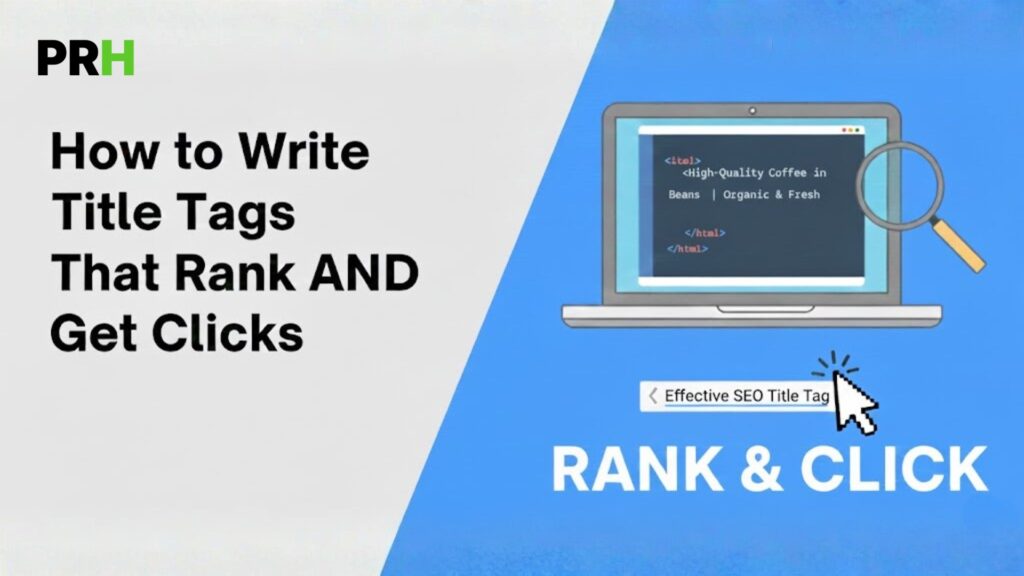

That small line of text appearing in search results carries enormous weight. When someone searches “bounce house rental near me” and sees ten options, your title tag is often the deciding factor in whether they click your listing or scroll past to a competitor.
Most party rental business owners understand that title tags matter for SEO. Fewer understand how to write them effectively. The result is an industry full of missed opportunities—generic titles that blend together, keyword-stuffed phrases that feel spammy, or bland descriptions that fail to communicate why someone should choose one company over another.
Writing title tags that both rank well and earn clicks requires balancing two different objectives. Search engines need clear signals about what your page offers and who it serves. Human readers need a compelling reason to click your result instead of the nine others on the page.
This guide walks through how to approach title tags specifically for party rental websites, where local competition is fierce and parents make quick decisions under time pressure.
Why Title Tags Deserve Serious Attention
Title tags influence your marketing success in two distinct ways, and understanding both helps explain why they deserve more than a few seconds of thought.
The Ranking Factor
Search engines use title tags as one of many signals to understand what a page is about. A well-crafted title tag helps Google connect your water slide rental page with people searching for water slide rentals in your area.
This doesn’t mean cramming keywords into your title guarantees rankings—search algorithms are far more sophisticated than that. But a clear, relevant title tag that accurately describes your page content gives search engines confidence about when to show your page in results.
For party rental businesses targeting local searches, title tags that include geographic information help establish relevance for location-based queries. Someone searching “bounce house rental Dallas” should find pages with titles that clearly indicate Dallas service.
The Click-Through Factor
Rankings only matter if people actually click through to your website. You could hold the number one position for a valuable search term and still lose business if your title tag fails to compel clicks.
Click-through rate itself may also influence rankings over time. When searchers consistently skip your listing in favor of others, that behavior signals to search engines that your result may not be the best match for that query.
In the party rental industry, where many local competitors offer similar services, your title tag is often your first and only chance to differentiate. Parents scanning search results are looking for signals of reliability, relevance, and trustworthiness. Your title tag needs to provide those signals in roughly 60 characters.
Anatomy of an Effective Party Rental Title Tag
Before diving into specific formulas, understanding the components that make title tags work helps you adapt principles to your unique situation.
The Primary Keyword
Every title tag should include the main term you want the page to rank for. For party rental websites, this typically means the specific service plus location:
- “Bounce House Rentals”
- “Water Slide Rental”
- “Party Equipment Rental”
- “Table and Chair Rentals”
These primary keywords should appear early in the title tag when possible. Front-loading important terms ensures they’re visible even if the title gets truncated in search results, and some evidence suggests early placement carries slightly more ranking weight.
Geographic Targeting
Local businesses live and die by geographic relevance. Your title tags need to clearly signal where you provide service.
This can be handled several ways:
City name: “Bounce House Rentals Houston” Region or metro area: “Party Rentals in the Phoenix Metro” Neighborhood for dense urban markets: “Brooklyn Bounce House Rental”
The geographic element serves both ranking and click-through purposes. It helps search engines understand your service area while immediately telling parents whether you serve their location.
Differentiating Elements
Here’s where most party rental title tags fall short. After the service and location, what makes your listing worth clicking over competitors?
Differentiators might include:
- Delivery and setup included
- Same-day availability
- Years in business
- Safety emphasis
- Pricing indication
- Service quality signals
These elements transform a generic title into one that gives parents a reason to click. The challenge is fitting meaningful differentiation into limited character space.
Brand Name
Including your business name helps with brand recognition and can build trust, especially if you have an established reputation in your market. However, brand names typically belong at the end of title tags unless brand awareness is unusually high in your area.
For most party rental businesses, service and location keywords should take priority over brand prominence in title tags.
Title Tag Formulas That Work for Party Rentals
Having a starting framework makes title tag creation more efficient. These formulas can be adapted for different page types across your website.
For Service Category Pages
These are your most valuable pages for SEO—your main bounce house, water slide, or event equipment sections.
Formula: [Primary Service] [Location] | [Differentiator] | [Brand]
Examples:
- “Bounce House Rentals Tampa FL | Delivered & Set Up | [Business Name]”
- “Water Slide Rentals Phoenix | Same-Day Available | [Business Name]”
- “Table Chair Rentals Austin | Free Delivery Over $200 | [Business Name]”
The pipe symbol (|) creates visual separation that’s easy to scan. The differentiator in the middle provides a reason to click while the brand at the end maintains recognition.
Alternative Formula: [Primary Service] in [Location] – [Value Proposition]
Examples:
- “Bounce House Rentals in Orlando – Safe, Clean, On-Time Delivery”
- “Party Equipment Rental San Diego – Weekend Packages Available”
- “Inflatable Rentals Denver Area – Inspected Before Every Event”
This format puts slightly more emphasis on location while the value proposition replaces explicit brand naming with benefit-focused language.
For Individual Product Pages
Each rental item in your inventory deserves its own optimized title tag rather than relying on automated templates that produce generic results.
Formula: [Specific Item Name] Rental [Location] | [Key Feature] | [Brand]
Examples:
- “Blue Castle Bounce House Rental Houston | Ages 3-12 | [Business Name]”
- “18ft Water Slide Rental Dallas | Includes Setup | [Business Name]”
- “60-Person Tent Rental Phoenix | Delivery Available | [Business Name]”
For product pages, including a specific feature or specification helps match long-tail searches where parents look for particular sizes, themes, or capacities.
For Location-Specific Pages
If you serve multiple cities or neighborhoods, dedicated location pages need title tags targeting each specific area.
Formula: [Service Category] [Specific Location] | [Trust Signal] | [Brand]
Examples:
- “Bounce House Rentals Katy TX | Serving Katy Since 2015 | [Business Name]”
- “Party Rentals Scottsdale | 500+ Events Completed | [Business Name]”
- “Inflatable Rentals North Dallas | Licensed & Insured | [Business Name]”
Trust signals work particularly well for location pages because they help overcome uncertainty—parents may not have heard of your business but feel reassured by indicators of legitimacy and experience.
For Homepage
Your homepage title tag should capture your primary service offering and main service area while remaining broad enough to represent your entire business.
Formula: [Core Service Offering] [Primary Location/Region] | [Brand Name]
Examples:
- “Party Rentals & Bounce Houses Houston TX | [Business Name]”
- “Inflatable & Event Equipment Rental Phoenix Metro | [Business Name]”
- “Bounce House & Party Rental Delivery Dallas Fort Worth | [Business Name]”
Homepage titles need to be somewhat general since the page serves as an entry point to all your services. Avoid trying to include every service you offer—focus on your primary category and location.
Writing Title Tags That Earn Clicks
Ranking well means nothing if searchers skip your listing. These principles help transform functional title tags into compelling ones.
Speak to Parent Priorities
Parents booking party rentals have specific concerns that influence their decisions. Your title tags can directly address these concerns:
Safety consciousness: “Inspected & Sanitized,” “SIOTO Certified,” “Licensed & Insured”
Convenience focus: “Delivered & Set Up,” “We Handle Everything,” “Same-Day Available”
Budget awareness: “Affordable,” “Package Deals,” “Free Delivery”
Reliability needs: “On-Time Guaranteed,” “Serving [Area] Since [Year],” “500+ Happy Families”
Choose differentiators based on what genuinely sets your business apart and what your specific market values most.
Create Urgency Without Being Pushy
Subtle urgency can improve click-through rates without feeling manipulative:
- “Book Early for Summer” (seasonal)
- “Weekend Availability” (implies limited slots)
- “Same-Week Delivery Available” (suggests responsiveness)
Avoid aggressive urgency tactics like “Book NOW!” or “Limited Time!” that feel spammy and erode trust.
Use Numbers When Relevant
Specific numbers catch attention and convey concrete information:
- “18ft Water Slide Rental” (size specification)
- “Serving 50+ Cities in DFW” (coverage scope)
- “4-Hour and All-Day Packages” (rental options)
- “Since 2012” (experience indicator)
Numbers break up text visually and provide specificity that vague claims lack.
Test Emotional Resonance
Parents booking party rentals are often planning celebrations for their children. Language that connects to positive emotions can improve engagement:
- “Make Their Party Unforgettable”
- “Stress-Free Party Rentals”
- “Birthday Party Rentals Kids Love”
Balance emotional elements with practical information. A title that’s all emotion without substance may get clicks but disappoint visitors seeking specific rental information.
Common Title Tag Mistakes to Avoid
Learning from common errors helps you sidestep problems that plague many party rental websites.
Keyword Stuffing
Trying to include every possible keyword variation produces titles that read awkwardly and may trigger spam filters:
Poor: “Bounce House Rental Bounce Houses for Rent Party Rentals Inflatable Rentals Dallas TX”
Better: “Bounce House Rentals Dallas TX | Delivered & Set Up | [Business Name]”
Choose one primary keyword phrase per page and use it naturally. Additional keyword variations belong in other on-page elements like headers and body content.
Duplicate Titles Across Pages
Using identical or nearly identical titles across multiple pages is surprisingly common and wastes significant SEO potential.
Each page on your site represents an opportunity to rank for different searches. Your bounce house page, water slide page, and obstacle course page should all have unique, specifically optimized title tags.
Audit your site for duplicate titles. Many website platforms generate these automatically if you don’t customize each page.
Ignoring Character Limits
Search engines truncate title tags that exceed roughly 60 characters (or about 580 pixels in width). Important information cut off by truncation fails to serve its purpose.
Check how your titles appear in actual search results. Some words may be replaced with ellipses (…) if titles run too long. Front-load the most important elements to ensure they remain visible.
Generic, Non-Descriptive Titles
Titles that could apply to any business provide no differentiation:
Generic examples to avoid:
- “Home”
- “Products”
- “Our Services”
- “Welcome to [Business Name]”
- “Party Rentals – [Business Name]”
Every page needs a title that specifically describes its content and gives searchers reason to click.
Forgetting Brand Consistency
While brand names typically belong at the end of title tags, they should appear consistently across your site. Inconsistent brand presentation in titles—sometimes including the full name, sometimes abbreviated, sometimes omitted—can confuse both search engines and users.
Choose a consistent brand format and apply it uniformly.
Page-by-Page Title Tag Strategy
Different pages on your party rental website serve different purposes and require different title tag approaches.
High-Priority Pages
Focus your optimization efforts first on pages with the highest traffic and conversion potential:
Homepage: Broad primary keyword + main service area + brand. This page captures branded searches and general service searches.
Main category pages: Specific service + location + differentiator + brand. These pages target your most valuable non-branded searches.
Top rental items: Product name + location + feature + brand. Your most popular individual rentals deserve custom-optimized titles.
Supporting Pages
Secondary pages still need proper optimization but may not require the same level of refinement:
About page: “[Business Name] – [Location] Party Rental Company” or “[Location] Party Rentals | About [Business Name]”
Contact page: “Contact [Business Name] | [Location] Party Rentals” or “Book Party Rentals [Location] | Contact Us”
FAQ page: “Party Rental FAQs | [Business Name] [Location]” or “Bounce House Rental Questions | [Business Name]”
Blog posts: Post title + brand or category. Blog title tags should accurately reflect post content while maintaining brand association.
Location Pages
If you serve multiple distinct areas, each location page needs careful title optimization:
Primary city: Full optimization with differentiators Secondary cities/suburbs: Service + specific location + brand Neighborhood pages (if applicable): Service + neighborhood + city + brand
Ensure location page titles are genuinely unique, not just the same template with city names swapped.
Testing and Refining Your Title Tags
Title tag optimization isn’t a one-time task. Ongoing testing and refinement improve results over time.
Monitoring Performance
Track how your pages perform for target keywords and how click-through rates compare to industry benchmarks. Google Search Console provides data on impressions, clicks, and average position for your pages.
Look for pages with strong rankings but low click-through rates—these represent opportunities where better title tags could significantly improve traffic.
Making Iterative Improvements
When testing title tag changes, modify one element at a time so you can identify what impacts performance. A complete title rewrite makes it impossible to know which change helped or hurt.
Allow adequate time between changes to gather meaningful data. Search engines may take days or weeks to re-index updated titles, and you need enough traffic data to draw conclusions.
Seasonal Adjustments
Party rental demand fluctuates throughout the year, and your title tags can reflect seasonal relevance:
- Summer: Emphasize water slides, outdoor equipment
- Fall: Highlight festival games, Halloween-themed rentals
- Spring: Focus on graduation parties, end-of-school celebrations
- Winter: Feature indoor inflatables, holiday event equipment
Consider creating seasonal variations of key title tags that you rotate throughout the year.
Local Competition Analysis
Understanding how competitors approach title tags reveals opportunities for differentiation.
What to Look For
Search your primary keywords and examine the title tags of top-ranking competitors:
- What keywords do they target?
- How do they position their brand?
- What differentiators do they highlight?
- Where do their titles fall short?
If every competitor uses nearly identical titles—”Bounce House Rentals [City] | [Business Name]”—there’s opportunity to stand out with more compelling, specific language.
Finding Gaps
Competitor analysis often reveals untargeted opportunities:
- Suburbs or neighborhoods without optimized local competitors
- Specific rental categories with weak title optimization
- Trust signals or differentiators no one else mentions
- Long-tail variations competitors ignore
These gaps represent lower-competition opportunities where strong title tags can help you capture rankings more quickly.

Practical Implementation Steps
Moving from understanding to action requires a systematic approach.
Step 1: Audit Current Title Tags
Review every page on your website and document current title tags. Note which pages have:
- Missing or default titles
- Duplicate titles shared across pages
- Titles exceeding character limits
- Titles missing location information
- Titles without compelling differentiators
Step 2: Prioritize Pages for Optimization
Rank pages by importance based on their traffic potential and business value. Category pages for your core services typically deserve priority, followed by location pages and high-traffic product pages.
Step 3: Write New Title Tags
Using the formulas and principles in this guide, write optimized titles for your priority pages. Keep a document tracking your old titles, new titles, and the reasoning behind changes.
Step 4: Implement Changes
Update title tags through your website platform. Most content management systems allow editing title tags through page settings or SEO plugins.
Step 5: Monitor Results
After implementation, track how rankings and click-through rates change. Give changes at least 4-6 weeks before drawing conclusions, as search engines need time to process and evaluate updated titles.
Step 6: Refine and Expand
Based on results from initial changes, refine what’s working and expand optimization to lower-priority pages. Continue monitoring and adjusting as you gather more data.
The Long View on Title Tag Optimization
Well-crafted title tags contribute to compounding returns over time. A bounce house category page with an optimized title can generate organic clicks for years, bringing in bookings without ongoing advertising spend.
This makes the upfront investment in thoughtful title tag creation worthwhile even though results aren’t immediate. The party rental businesses that dominate local search results didn’t get there through a single optimization pass—they built their presence through consistent attention to details like title tags.
The principles outlined here apply whether you’re launching a new party rental website or improving an established one. Start with your highest-priority pages, implement changes methodically, and monitor results to guide ongoing refinement.
Every search result is an opportunity to connect with a parent planning a celebration. Your title tags determine whether that opportunity becomes a click, and whether that click becomes a booking.