
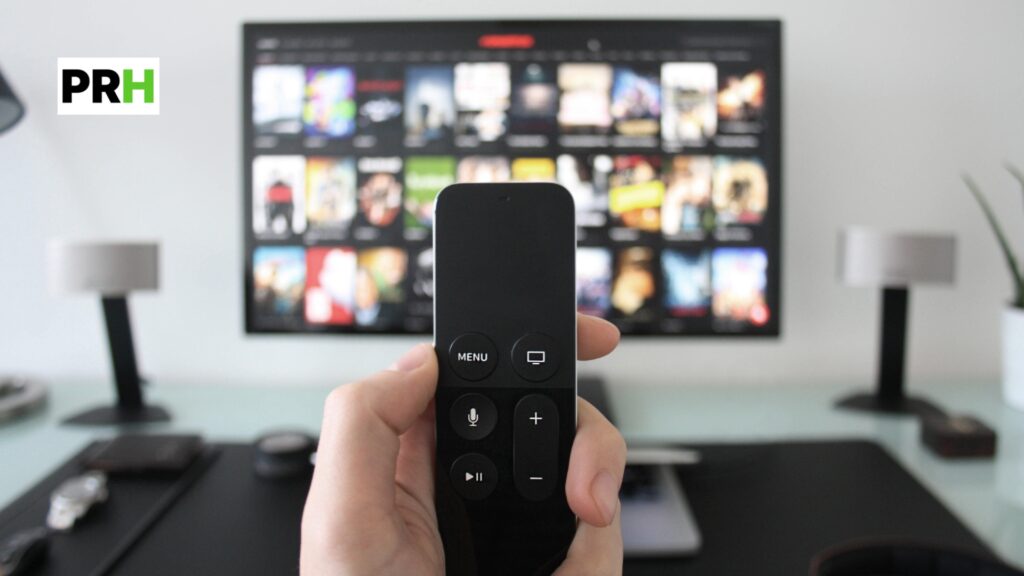

CTV advertising has become accessible to local businesses like party rental and bounce house companies, with minimum budgets dropping from $25,000+ to as low as $50 on some platforms. The U.S. CTV ad market reached $33.35 billion in 2025, with streaming now capturing 44.8% of total TV viewership—surpassing broadcast and cable combined for the first time in history. For event rental businesses, CTV offers the credibility of television advertising combined with digital targeting precision, enabling you to reach parents planning birthday parties, corporate event planners, and families in your specific service area. However, CTV works best as a brand awareness channel rather than direct response, requiring budgets of $2,500-5,000 monthly for 6+ weeks to generate meaningful results.
The CTV landscape explained: what small businesses need to know
Connected TV (CTV) refers to any television that connects to the internet—smart TVs, Roku devices, Amazon Fire TV, Apple TV, gaming consoles—and streams digital video content. CTV advertising delivers video ads through these devices within streaming apps like Hulu, Peacock, Tubi, and Netflix’s ad tier.
The distinction between CTV and OTT matters: OTT (Over-the-Top) describes how content is delivered (streaming via internet), while CTV describes where it’s watched (on a TV screen). All CTV is OTT, but OTT also includes phones, tablets, and laptops. When you buy CTV advertising, you’re specifically targeting the big screen in living rooms.
Compared to traditional linear TV, CTV offers dramatically better targeting and lower entry barriers:
| Factor | CTV Advertising | Traditional TV |
| Targeting | Household-level by ZIP code, demographics, interests | Broad demographics (women 18-49) |
| Minimum budget | $50-$500 on self-serve platforms | $50,000+ typical |
| Measurement | Real-time impressions, completion rates, attribution | Limited viewership data |
| Ad completion | 90-98% (non-skippable) | ~65% average attention |
Market penetration is near-universal: 90% of U.S. households use internet-connected TV devices, with 234 million individual CTV viewers representing 70.5% of the population. The average household owns 3.9 CTV devices. For party rental businesses, this means your potential customers are almost certainly reachable through CTV.
Millennials with young children—a core demographic for bounce house and party equipment rentals—spend over 7 hours daily streaming CTV content, three times more than their peers without children. Peak viewing occurs at 9 PM, with primetime (8-11 PM) remaining the highest-attention window.
Self-serve platforms now open the door to small advertisers
The emergence of self-serve CTV platforms has fundamentally changed accessibility. 97% of MNTN’s customers have never advertised on TV before—indicating how many small businesses are entering this channel for the first time.
Best platforms for local businesses (by minimum budget)
| Platform | Minimum | Best For | Key Feature |
| Adwave | $50 | Beginners | AI creates ads from your website |
| Vibe.co | $50/day | Budget-conscious | Transparent $12-25 CPM |
| Roku Ads Manager | No stated minimum | Local targeting | ZIP code targeting, Shopify integration |
| Hulu Ad Manager | $500/campaign | Premium inventory | Disney Campaign Manager access |
| YouTube CTV (Google Ads) | ~$100-150/month | Google Ads users | 300M+ monthly CTV users |
| Amazon DSP (reseller) | $5,000/month | Amazon sellers | Shopping behavior data |
Roku Ads Manager stands out for local businesses. Launched September 2024, it reaches 90+ million streaming households (40% U.S. market share), offers ZIP code-level targeting, and includes Action Ads that let viewers request information via SMS. The June 2025 partnership with Amazon Ads now covers 80%+ of U.S. CTV households through a single platform.
FAST channels (Free Ad-Supported Streaming TV) like Tubi (80 million monthly users), Pluto TV (54+ million subscribers), and The Roku Channel offer the most affordable CPMs at $10-15, making them ideal for budget-conscious testing. These channels combined capture 5.7% of total TV viewing—larger than any individual broadcast network.
Google’s CTV options are accessible through standard Google Ads accounts, reaching YouTube’s massive CTV audience. YouTube captures 12.5% of all TV viewing and is the single largest ad-supported CTV service. The platform now offers Shoppable CTV with QR codes and Pause Ads that appear when viewers pause content.
Meta/Facebook does not offer CTV advertising directly in 2025. However, services like Spaceback can convert Instagram Stories, TikTok, and Facebook content into CTV-ready ads, maintaining the look of social posts while displaying on the big screen.
Targeting parents, homeowners, and event planners with precision
CTV targeting capabilities have matured significantly, enabling local businesses to reach specific household profiles within their service areas.
Geographic targeting options
| Level | Description | Best Use |
| ZIP code | Precise neighborhood targeting | Core service area |
| Radius | Custom distance from location | 10-25 miles typical |
| DMA | Regional TV market areas | Broader campaigns |
| City/State | Administrative boundaries | Multi-market expansion |
Simpli.fi offers the best hyperlocal targeting, dividing the U.S. into 41,000+ targetable ZIP codes. Roku Ads Manager and MNTN both support ZIP code-level targeting suitable for local service businesses. Geographic targeting uses IP address mapping (linking household IP to location), subscriber registration data, and device location services.
Demographic and behavioral targeting for party rentals
For event rental companies, effective targeting combines:
- Parents with children ages 4-12 (available through TransUnion, Experian data)
- Household income $75,000+ (for premium party services)
- Homeowners (backyard parties, housewarming events)
- In-market for party supplies (actively researching or planning)
- Life events: New parents, upcoming children’s birthdays, recently moved households
Platforms like Simpli.fi offer 3,000+ demographic segments including household composition, children’s age ranges, and family activities. This enables a targeting stack like: households with children 7-12, income $100K+, interested in entertainment and outdoors, within specific ZIP codes.
ACR (Automatic Content Recognition) data from smart TVs (Vizio, Samsung, LG) enables targeting based on actual viewing behavior—reaching households that watch family programming, home improvement shows, or competitor ads.
Retargeting website visitors on CTV
Yes, you can retarget website visitors on CTV. The process works through:
- Place a retargeting pixel on your website
- Pixel captures visitor device ID and IP address
- Data is matched to household-level identifiers via device graphs
- CTV ads serve to those households during streaming
Platforms supporting CTV retargeting include MNTN Performance TV, Strategus, Amazon DSP, The Trade Desk, and StackAdapt. You can also upload customer email lists for CTV targeting and create lookalike audiences from your best customers—though minimum seed audiences of 1,000+ matched users are typically required for effective lookalike modeling.

What CTV advertising actually costs in 2025
CPM (cost per thousand impressions) is the standard pricing model, with rates varying significantly by inventory quality and targeting precision.
CPM benchmarks by inventory tier
| Tier | CPM Range | Examples |
| Economy/FAST | $12-22 | Tubi, Pluto TV, Xumo |
| Standard programmatic | $22-35 | Roku Channel, Fire TV, mixed apps |
| Premium streaming | $35-50 | Peacock, Paramount+, ESPN+ |
| Ultra-premium | $45-65+ | Hulu, Netflix, Max, live sports |
CPMs are declining 10-25% year-over-year due to increased inventory supply from new ad-supported tiers (Netflix, Disney+, Amazon Prime Video). This creates a buyer’s market for small advertisers.
Each targeting layer adds cost: ZIP code targeting adds 10-20%, demographic filters add 15-25%, interest/behavioral targeting adds 20-35%. Combined targeting can add 30-50% to base CPMs.
What different budgets buy
| Monthly Budget | Impressions (at $28 CPM) | Households Reached (4x frequency) | Realistic Outcome |
| $500 | ~18,000 | ~4,500 | Directional test only |
| $2,000 | ~71,400 | ~17,850 | Valid channel test |
| $5,000 | ~178,500 | ~44,600 | Measurable business impact |
| $10,000 | ~357,000 | ~71,400 | Strong local market presence |
Recommended starting budget: $2,500-5,000 monthly for 6+ weeks minimum. Shorter campaigns don’t generate statistically meaningful data. January-February and July-August offer the best CPM value (15-25% lower), while Q4 costs 20-40% more due to holiday competition.
Cost comparison to other channels
| Channel | CPM Range | Completion Rate | Best For |
| CTV | $20-40 | 90-98% | Brand awareness |
| YouTube | $10-25 | 20-40% | Performance + awareness |
| Facebook/Instagram video | $6-16 | 15-30% | Direct response |
| Local cable TV | $10-15 | ~65% | Broad reach (high minimums) |
| Display ads | $2-10 | N/A | Retargeting |
Despite higher CPMs, CTV’s 95%+ completion rates mean cost-per-completed-view often beats “cheaper” channels. At typical rates, CTV costs $0.012-0.020 per completed view (1-2 cents), competitive with YouTube.
Creating effective CTV ads without a big production budget
Technical specifications every platform accepts
| Specification | Requirement |
| Format | MP4 (H.264 codec) |
| Resolution | 1920×1080 (1080p) minimum |
| Aspect ratio | 16:9 (widescreen), no letterboxing |
| Duration | 15 or 30 seconds (most common) |
| Bitrate | 15 Mbps+ recommended |
| Audio | 2-channel stereo, 48 kHz, -23 LUFS |
| File size | Under 500 MB |
15-second spots are most cost-effective and force concise messaging. 30-second spots allow more storytelling and are better for brand building.
Creative best practices for local service businesses
Hook in the first 3-6 seconds: Show your brand logo immediately and lead with visually compelling footage. Unlike mobile ads where sound is often off, CTV viewers have sound on—leverage voiceover, music, and sound effects.
Structure for 30-second ads: Problem (2-3s) → Agitate (3-5s) → Solution with footage (10-15s) → Social proof/testimonial (5-7s) → Call-to-action with contact info (5s)
For party rental companies specifically:
- Show equipment in use at real events, not in a warehouse
- Include before/after transformations of empty venues becoming decorated party spaces
- Feature brief customer testimonials captured during or immediately after events
- Lead with seasonal messaging aligned with event calendars
- Emphasize convenience: “We set up and take down—you just enjoy the party”
QR codes work on CTV
76% of consumers would scan a QR code in a relevant TV ad, and 83% of Americans use a phone while watching TV. QR codes boost attention by 12% and enable direct response from an awareness channel.
QR code best practices:
- Display for at least 5-10 seconds (use only on 15+ second ads)
- Position in corner without blocking main message
- Pair with compelling CTA: “Scan for 20% off your first rental”
- Link to mobile-optimized landing page with UTM tracking
- Test across multiple devices before launch
Production options by budget
| Level | Cost | What You Get |
| DIY/Templates | $0-500 | Canva, Animoto, AI-generated from website (Adwave) |
| Budget professional | $1,000-5,000 | Simple concept, one location, basic editing |
| Mid-range | $5,000-10,000 | Custom script, professional crew, multiple scenes |
| Premium | $20,000+ | Full production, talent, concept development |
Roku’s Spaceback tool (free) converts existing social media content to CTV-ready format. Many platforms now offer AI-generated professional ads from your existing website content, eliminating production costs for small businesses.
Smartphone filming tips: Use 4K/1080p setting in horizontal orientation, stabilize with a tripod ($20-50), use natural light or affordable LED panels ($30-100), and capture audio with an external microphone ($50-150).
Tracking results when viewers can’t click
Attribution is CTV’s biggest challenge—viewers can’t click on TV screens, and they often convert days later on different devices. However, measurement has improved significantly.
Available metrics and what they mean
| Metric | What It Measures | CTV Benchmark |
| Video completion rate (VCR) | % of ad watched to end | 90-98% |
| Reach | Unique households exposed | Varies by budget |
| Frequency | Average exposures per household | 4-7 optimal |
| Website visits (post-view) | Site traffic from exposed households | Track via pixels |
| Search lift | Increase in branded searches | 6-14% conversion rate lift |
| Foot traffic | Store visits from exposed households | Via GPS attribution |
How to track website visits and conversions
Post-view website tracking works through pixels installed on your website that capture visits from households exposed to CTV ads. Device graphs link the TV impression to subsequent activity on other household devices.
Practical tracking approaches:
- Create unique landing pages or vanity URLs for CTV campaigns
- Use UTM parameters to identify CTV traffic
- Track branded search query increases during campaigns
- Display unique phone numbers in CTV spots (calls to that number = CTV attribution)
- Use foot traffic attribution if you have a physical showroom (available through Madhive, Strategus, Simpli.fi)
Case study: A local auto dealer measured 406 customers who visited their dealership after seeing CTV ads, with an average of 2 visits per person from 2.5 million impressions.
Realistic ROI expectations
CTV delivers 23% higher ROI than traditional TV and 30% stronger ROI than other advertising channels when used for brand building—but results take time.
Timeline for results:
- Brand awareness effects: 1-3+ months to see meaningful impact
- Search lift and website traffic increases: 2-4 weeks (directional signals)
- Revenue attribution: 3-6 months for full picture
ROI calculation reality: CTV is often revenue-positive but not immediately profit-positive on first purchase. Factor in customer lifetime value—businesses where CLV exceeds $500 (professional services, home services, event rentals with repeat customers) find CTV most viable.
Benchmarks from local business campaigns:
- Mountain Burger (restaurant): $500/month × 3 months → 60,000 impressions, 18% weeknight traffic increase
- Local furniture store: $2,500/month → significant traffic lift from targeted ZIP codes
- Performing arts theater: CTV with dynamic creative → 100% subscription sellout, 502 website visits in 7 days
When CTV makes sense versus other channels
CTV vs. social media video ads
| Factor | CTV | Social Media (Meta) |
| Viewer attention | 80% pay attention (lean-back viewing) | 21% attention (scroll-past behavior) |
| Screen | Largest in household | Small personal device |
| Completion rate | 90-98% | Much lower, often skipped |
| CPM | $25-65 | $6-16 |
| Attribution | Complex but improving | Strong direct-response tracking |
| Best for | Brand awareness, trust-building | Direct response, retargeting |
Choose CTV when: Building brand awareness in your local market, establishing credibility and trust, reaching households during premium viewing moments, targeting parents and families on the big screen.
Choose social when: Limited budget (under $2,000/month), need immediate conversions, direct response campaigns, retargeting warm audiences.
Best approach: Use both. CTV for upper-funnel awareness (getting on the “mental shortlist”), social for lower-funnel conversion. 41% of brands power CTV by reallocating from social budgets.
CTV vs. YouTube advertising
YouTube is actually the single largest ad-supported CTV service—68.8% of YouTube’s 248.6 million U.S. viewers watch on CTV devices. You can access YouTube CTV through standard Google Ads accounts.
YouTube CTV advantages: Lower CPMs ($20-25), skippable options for cost control, strong attribution through Google ecosystem, individual-level targeting.
Non-YouTube CTV advantages: Premium content environment (Hulu, Disney+), non-skippable format guarantees completion, brand-safe premium programming.
CTV’s role in the marketing funnel
CTV is primarily a top-of-funnel awareness channel—it excels at getting your business on the mental shortlist when customers need party rental services. Interactive formats (QR codes, shoppable ads) now enable some direct response, but don’t expect CTV to perform like search ads.
Optimal multi-channel approach for party rental businesses:
- CTV creates awareness: Parents see your ad during evening streaming
- Search captures intent: When they Google “bounce house rental near me,” you appear
- Social retargeting reinforces: Your ad follows them on Facebook/Instagram
- Website converts: Quote request or booking completed

Getting started: checklist and common mistakes
Launch checklist for your first CTV campaign
Pre-launch preparation:
- [ ] Define objective: Brand awareness, website visits, or foot traffic
- [ ] Establish budget: Minimum $2,500-5,000 for 6+ weeks
- [ ] Identify target audience: Geography first (ZIP codes in service area), then demographics (parents, income)
- [ ] Prepare video creative: 30-second spot, 16:9 HD, professional quality
- [ ] Set up tracking: Website pixel, unique phone number, UTM parameters
- [ ] Define KPIs: Impressions, VCR, website visits, branded search lift
Platform selection for party rental businesses:
- $500-1,500/month: Roku Ads Manager, Hulu Ad Manager, Vibe.co
- $1,500-3,000/month: Programmatic self-serve (StackAdapt, Quantcast) + YouTube CTV
- $3,000-5,000/month: Multi-platform mix (premium + FAST channels) with geographic targeting
Common mistakes to avoid
Budget mistakes:
- Spending under $2,000/month (insufficient for statistical significance)
- Running campaigns shorter than 6 weeks (not enough data)
- Expecting immediate ROI like paid search
Targeting mistakes:
- Making audiences too small (keep segments above 500K households)
- Ignoring geographic targeting before refining demographics
- Over-targeting on assumptions without performance data
Creative mistakes:
- Using non-TV quality video (broadcast quality is expected)
- Missing clear CTA with website/phone number
- Not adapting mobile/social ads for the big screen (horizontal, sound-on)
Measurement mistakes:
- Not setting up tracking before launch
- Measuring like direct-response digital (expecting clicks)
- Attribution windows too short (miss delayed conversions)
When CTV is NOT the right choice
Don’t prioritize CTV if:
- Budget under $2,000/month (focus on search/social first)
- Average transaction under $50 with no repeat business
- Unable to track any conversion path (no website, no physical location)
- Need immediate conversions today (CTV builds awareness over months)
- Extremely narrow geographic target (under 50,000 households)
For party rental businesses, CTV makes sense if your average rental is $500+ with potential for repeat business or referrals, your service area covers at least a 15-mile radius with 500K+ households, and you can track website visits, quote requests, and bookings.
Scaling as budget grows
Phase 1 (Test): $3,000-5,000/month
- Single platform (Roku or Hulu)
- One creative, geographic targeting only
- Run 6-8 weeks, establish baseline metrics
Phase 2 (Optimize): $5,000-15,000/month
- A/B test creative versions
- Add demographic/interest targeting
- Introduce cross-device retargeting
- Expand geographic targeting incrementally
Phase 3 (Expand): $15,000-30,000+/month
- Multi-platform strategy (premium + FAST)
- Interactive formats (QR codes)
- Brand lift studies for measurement
- Sequential messaging across channels
Applying this to party rental and event equipment businesses
CTV offers party rental companies something previously impossible: television advertising with neighborhood-level targeting and measurable results, at budgets that don’t require enterprise marketing departments.
Recommended targeting for party rentals:
- ZIP codes within 15-25 miles of your location
- Parents with children ages 4-12
- Household income $75,000+ (adjust based on your pricing)
- Homeowners (backyard parties, graduation celebrations)
- Seasonal timing: Increase spend 4-6 weeks before peak event seasons (spring graduations, summer birthdays, fall harvest festivals)
Creative direction:
- Show bounce houses, tents, and equipment in use at actual events with happy families
- Feature 10-15 second customer testimonials captured at real parties
- Emphasize convenience and stress-free experience
- Include QR code linking to party packages or instant quote request
- Display phone number prominently for direct calls
Measurement priorities:
- Track website traffic during campaigns (expect 15-25% lift)
- Monitor branded search volume (“your company name + party rentals”)
- Use unique phone numbers to track CTV-driven calls
- Ask new customers “How did you hear about us?” during booking
- Allow 3-6 months to build awareness and see compounding results
Budget recommendation for testing: $3,000-5,000/month for 8 weeks on Roku Ads Manager or Hulu Ad Manager, targeting your core service area with a 30-second spot showing equipment at real events, testimonials, and a QR code for instant quotes. Track website visits and phone calls. If you see positive signals after 8 weeks, expand platforms and geographic reach.
The opportunity for local service businesses is clear: CTV advertising has democratized television, and early-adopting local businesses can establish brand presence on the biggest screen in the household—before their competitors recognize the opportunity.